HeyGen vs Synthesia 2026: Which AI Avatar Video Tool Actually Wins?
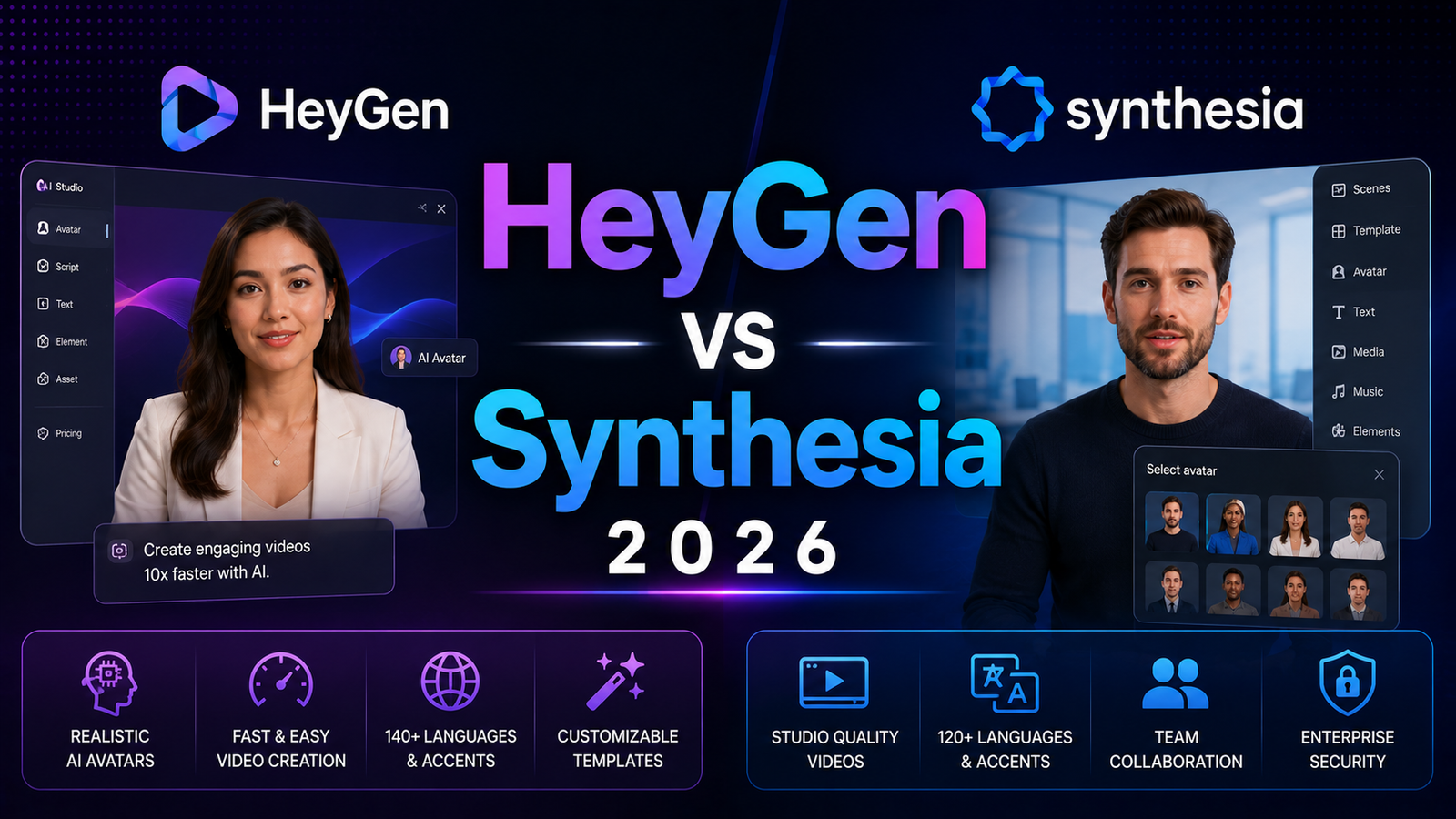
The HeyGen vs Synthesia comparison was already a close call in 2024. In 2026, a significant development changed it. HeyGen retired all unlimited plans on May 15, 2026 and moved entirely to credit-based pricing. Simultaneously, Synthesia added custom personal avatars, the digital twin feature previously requiring an expensive add-on, to its $14 per month annual Starter plan. Those two changes shifted the default recommendation for most individual users toward Synthesia for the first time.
The underlying capabilities have also converged. HeyGen’s Avatar IV generation produces the most expressive, natural-movement avatars currently available from either platform. Synthesia’s Express-2 model closed a quality gap that was more obvious in 2024. HeyGen leads on language reach at 175-plus languages with lip-synced video translation as a breakout marketing feature. Synthesia leads on enterprise governance with SOC 2 Type II, ISO 42001, SCORM export, and enterprise workflow controls that HeyGen does not yet match in depth.
The decision still breaks down by use case, but the credit model change at HeyGen means the economics comparison looks different than it did twelve months ago.
Comparison Table
| Feature | HeyGen | Synthesia |
|---|---|---|
| Stock avatars | 100+ (vendor claims 1,100+ including variants) | 230+ (vendor claims 662+ including enterprise-restricted) |
| Custom avatar creation | Instant Avatar from short clip; $99 one-time on lower tiers | Included in Starter at $14/month annual (from 2026) |
| Avatar IV / Express-2 | Avatar IV on paid plans; most expressive natural movement | Express-2 on all plans; structured polish |
| Languages | 175+ with lip-synced translation | 140-160+ for narration |
| Video translation (dubbing) | Yes, lip-synced across languages | Yes, one-click project localization |
| Voice cloning | Yes, on paid plans | Yes, limited compared to HeyGen |
| Pricing model | Credit-based since May 15, 2026; ~600 credits/month at Creator ($29/month) | Minute-based; Starter $14/month annual (120 min/year); Creator $29/month |
| Free tier | Yes (limited credits) | Yes (10 min/month video) |
| SCORM export | Higher tiers / enterprise | Available on paid plans |
| SOC 2 Type II | In progress / limited | Yes, full certification |
| ISO 42001 | Not documented | Yes |
| HIPAA compliance | Not published as of 2026 | Not published as of 2026 |
| LMS integration | Via export | Yes, direct LMS integration |
| G2 rating | 4.8/5 (1,246 reviews) | 4.7/5 (2,163 reviews) |
| Trustpilot | 2.4/5 | 4.0/5 |
“Pricing is subject to change. HeyGen retired unlimited plans on May 15, 2026, moving to full credit-based pricing. Synthesia added custom personal avatars to the Starter plan in 2026. Always verify current pricing and plan details at heygen.com and synthesia.io before purchasing. Neither platform has published HIPAA compliance documentation as of mid-2026.”
Avatar Realism and Expressiveness
HeyGen’s Avatar IV is the most technically capable avatar generation system in the comparison. Natural micro-expressions, fluid hand gestures, realistic eye movement, and emotional range across presenter styles make Avatar IV the standard that competitors benchmark against. For creators producing social content, brand videos, and personalized sales outreach where avatar naturalness directly affects viewer engagement, HeyGen’s investment in expressive AI avatar technology is the clearest competitive advantage.
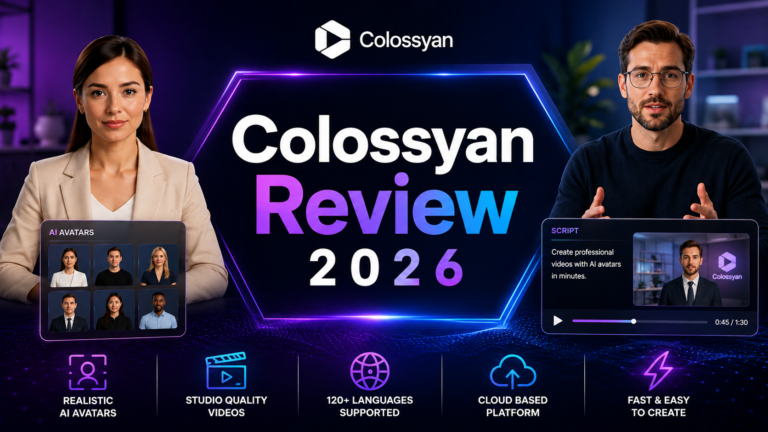
Synthesia’s Express-2 model has closed a meaningful quality gap since 2024. The avatars are polished and professional, optimized for neutrality and consistency across long training content rather than for expressive dynamism. Where HeyGen’s Avatar IV aims for natural human expressiveness, Synthesia’s avatar library is tuned for neutral, repeatable, on-brand delivery that produces consistent output across a library of thousands of training videos. For L&D and compliance teams where presenters should fade into the background of the content rather than drawing attention, Synthesia’s structural approach is the correct design philosophy even if the output is less dynamically expressive.
The uncanny valley caveat applies to both platforms in 2026. AI avatar generation still triggers artificiality detection in viewers, particularly in emotionally driven scenes and dialogue-heavy content where micro-expression timing is most critical. For training content and social clips where viewers expect a digital presenter, this matters less. For brand campaigns where emotional connection drives conversion, neither platform’s avatar fully replaces human video production.
The vendor avatar count claims deserve skepticism. HeyGen claims 1,100-plus avatars; independent reviewers consistently report lower numbers, noting that HeyGen’s count likely includes variations of the same base avatar in different outfits, poses, and settings. Synthesia claims 662-plus avatars, with some restricted to enterprise plans. The independent consensus from G2 and testing sites is that both platforms have substantial avatar libraries with meaningful variety, but the vendor headline numbers overstate differentiation.
Language and Translation Coverage
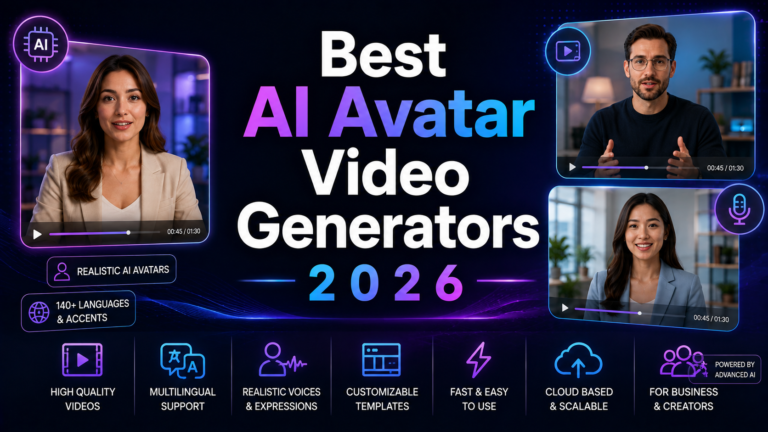
HeyGen leads on language breadth with 175-plus languages and dialects on paid plans, compared to 140 to 160-plus for Synthesia. The more commercially significant difference is HeyGen’s lip-synced video translation: upload an existing video in any language, and HeyGen translates the content and re-voices it with matched lip sync in the target language. This viral dubbing feature has become a breakout use case for marketing teams distributing content globally, compressing multilingual video production from separate per-language productions to a single source video with automated localization.
Synthesia’s translation workflow is strong for pre-production localization: build a project once and translate it into 160-plus languages from the editor, with consistent avatar delivery in each language. The workflow is designed for enterprise L&D teams that need standardized training content across global employee populations rather than for post-production dubbing of existing video.
Neither platform has published HIPAA compliance documentation as of mid-2026, despite growing demand from healthcare and financial services buyers in multilingual markets. This is a documented gap for regulated industry buyers, and both platforms should be verified directly for any emerging compliance documentation before procurement.
Editing Workflow
Synthesia’s editor is the more structured and predictable environment. The slide-based interface breaks videos into scenes that work like presentation slides, allowing non-linear editing, scene reordering, and content updates to specific sections without rebuilding the full video. For enterprise teams where multiple stakeholders review and revise training content, the structured editor reduces rework by enabling targeted edits to individual scenes. Template libraries, brand kit controls, and workspace sharing are designed for team production workflows where consistency across contributors matters.
HeyGen’s editor is faster and more creator-oriented. Script-to-video production moves more quickly for solo creators, and the editing tools reflect a content creation rather than an enterprise production philosophy. For marketing teams and individual creators who need to produce polished avatar videos quickly without multi-stakeholder review workflows, HeyGen’s speed-oriented editing is the better match.
The credit-based pricing change at HeyGen post-May 2026 has a workflow implication: every generation and feature now consumes credits, including content that was previously unlimited. In practice, the Creator plan at $29 per month with 600 credits per month produces approximately 4 short videos per month when using premium features, according to practitioners documenting the transition. This is a meaningful constraint for creators who previously relied on unlimited plan volumes.
Pricing and Total Cost of Ownership
The pricing comparison in 2026 is more nuanced than the headline plan prices suggest.
HeyGen Creator at $29 per month provides 600 credits per month with rollover. Credits are now consumed by all generation features including standard video production. For a solo marketer producing 10 premium avatar videos per month, the credit math requires careful modeling against per-video credit consumption rates.
Synthesia Starter at $14 per month on annual billing includes a custom personal avatar, AI dubbing, and 120 minutes of video per year, roughly 10 minutes per month. For a creator producing one or two videos per month with their own digital twin, Synthesia’s $14 annual plan is now more economical than HeyGen’s $29 for the same use case. This represents a meaningful shift from the 2024 comparison where HeyGen’s unlimited plan was the budget-conscious choice.
At team and enterprise scale, total cost of ownership is the more relevant calculation. A 25-person L&D team pays $7,500 to $25,000 per year on either platform depending on usage volume and plan tier. At that scale, Synthesia’s SCORM export, LMS integration, SOC 2 compliance, and enterprise governance features provide operational infrastructure that reduces workflow overhead and IT procurement complexity.
Custom avatar creation is the most significant per-feature cost difference. HeyGen includes Instant Avatar creation in paid plans or at a $99 one-time fee on lower tiers. Synthesia includes a custom personal avatar in the $14 Starter plan from 2026, eliminating what was previously a $1,000-per-year enterprise add-on. For teams that need branded presenters rather than stock avatars, this change significantly improves Synthesia’s value proposition at the individual and small team level.
Who Should Choose Each Platform
Choose HeyGen when: Your primary use case is marketing video, short-form social content, or personalized sales outreach where avatar expressiveness and naturalness matter most to viewer engagement. HeyGen’s Avatar IV produces the most expressive and natural-movement avatars in the comparison. If your team distributes content globally and needs lip-synced video translation across 175-plus languages, HeyGen’s viral dubbing feature covers that use case more completely than Synthesia. Voice cloning quality is stronger on HeyGen for teams that need to create consistent character voices. And for teams comfortable with the credit model change, HeyGen’s G2 rating of 4.8 from 1,246 reviews reflects strong user satisfaction on core creator workflows.
Choose Synthesia when: Your primary use case is enterprise training, compliance video, or L&D content that needs structured editing, SCORM export, LMS integration, and enterprise governance. Synthesia’s SOC 2 Type II and ISO 42001 certifications address enterprise security requirements that HeyGen has not yet fully documented. Custom personal avatars included in the $14 annual Starter plan make Synthesia the more economical choice for individual creators producing consistent content with their own digital twin. For teams whose compliance and training content requires a stable, auditable production workflow with multi-stakeholder review, Synthesia’s structured editor is more appropriate than HeyGen’s creator-oriented interface.
Frequently Asked Questions
What does HeyGen’s May 2026 shift to credit-based pricing actually mean for existing users and new buyers?
HeyGen retired all unlimited plans on May 15, 2026 and moved to full credit-based pricing across all tiers. Legacy users on unlimited plans were able to retain their existing plans, but new subscribers and plan changers move to the credit model. The Creator plan at $29 per month provides 600 monthly credits with rollover, an improvement over previous plans in that unused credits now carry forward. The practical impact is that every video generation feature, including content that was previously unlimited, now consumes credits. Practitioners who document the transition consistently note that 600 monthly credits support approximately 4 short premium videos per month when using Avatar IV and premium features, significantly below what unlimited plans supported. For creators who relied on high-volume production on unlimited HeyGen plans, the credit transition may require plan tier review or workflow optimization to maintain previous output levels within the credit allocation.
Do either platform support HIPAA compliance for healthcare or financial services use cases?
As of mid-2026, neither HeyGen nor Synthesia has published HIPAA compliance documentation, despite growing demand from healthcare and financial services buyers. Synthesia holds SOC 2 Type II and ISO 42001 certifications, which address information security requirements for enterprise buyers but do not constitute HIPAA compliance certification. Healthcare and financial services organizations with compliance requirements for HIPAA or equivalent regulated data handling should verify the current compliance posture directly with each vendor’s enterprise sales team before procurement. Neither platform should be assumed HIPAA-compliant based on available public documentation as of this review date.
Is the avatar quality gap between HeyGen and Synthesia large enough to justify the cost difference at the creator level?
In 2026, the quality gap is narrower than in 2024 following Synthesia’s Express-2 update, but HeyGen’s Avatar IV maintains a meaningful lead on expressive natural movement for creators where that quality directly affects viewer engagement. At the individual creator level where the comparison is $14 per month annual Synthesia Starter with custom avatar versus $29 per month HeyGen Creator, the cost differential is $15 per month or $180 per year. Whether Avatar IV’s expressiveness justifies that premium depends on whether the videos are driving direct commercial outcomes where avatar naturalness affects conversion, or are being used for content and training where structural consistency matters more than expressive dynamism. For a creator producing daily social content, HeyGen’s Avatar IV expressiveness and voice cloning quality are more commercially relevant than Synthesia’s compliance infrastructure. For a training manager producing quarterly compliance videos, Synthesia’s $14 Starter plan with custom avatar and SCORM capability covers the requirement at lower cost.
Final Verdict
The default recommendation flipped in 2026 for individual users: Synthesia at $14 per month annual with a custom personal avatar included is now the more economical starting point for creators who produce consistent content with their own digital twin. HeyGen at $29 per month with the credit model change produces approximately 4 premium videos per month before credits are exhausted, which is below the unlimited-plan volumes that drove HeyGen’s previous recommendation for high-volume creators.
HeyGen remains the stronger platform for the specific use cases where its advantages are decisive: Avatar IV expressiveness for marketing and sales content where avatar naturalness drives engagement, 175-plus language lip-synced video translation for global content distribution, and voice cloning quality that trails no competitor in the comparison.
Synthesia is the safer enterprise choice for L&D, compliance, and training video at team and enterprise scale: SOC 2 Type II, ISO 42001, SCORM export, LMS integration, structured editing with workspace governance, and the most stable enterprise procurement posture of either platform.
For most individual creators and small teams producing regular video content: start with Synthesia’s free tier, evaluate the Express-2 avatar quality against your content requirements, and assess whether the $14 annual Starter plan covers your monthly volume before deciding if HeyGen’s higher expressiveness justifies the price difference.
Disclosure: This article contains affiliate links.