
Best AI Keyword Research Tools 2026: We Tested Every Major Platform on Real Campaigns
AI Keyword research has changed more in the past two years than in the previous decade. The change is not primarily about AI writing content faster. It is about AI redefining what it means for a keyword to have commercial value. In 2024 and earlier, keyword difficulty scores, search volume, and domain authority were the primary inputs to any research decision. In 2026, those signals still matter, but a fourth variable has entered: whether the keyword will trigger an AI Overview in Google Search, and if it does, whether the page will be cited in that overview or bypassed entirely in favor of the AI-generated summary.
That shift changes the keyword research workflow in practical ways. Tools that only surface volume and difficulty are now missing the layer that determines whether a ranking even results in a click. The best keyword research tools in 2026 address the full picture: discovery, competition analysis, SERP feature analysis, content optimization, and increasingly, topical authority mapping that gives a site the best chance of being cited in AI search results rather than displaced by them.
This guide covers eight tools across the keyword research ecosystem. Each was tested on real campaigns, not demo datasets.
Comparison Table: Best AI Keyword Research Tools 2026
| Tool | Best For | Starting Price | Free Trial |
|---|---|---|---|
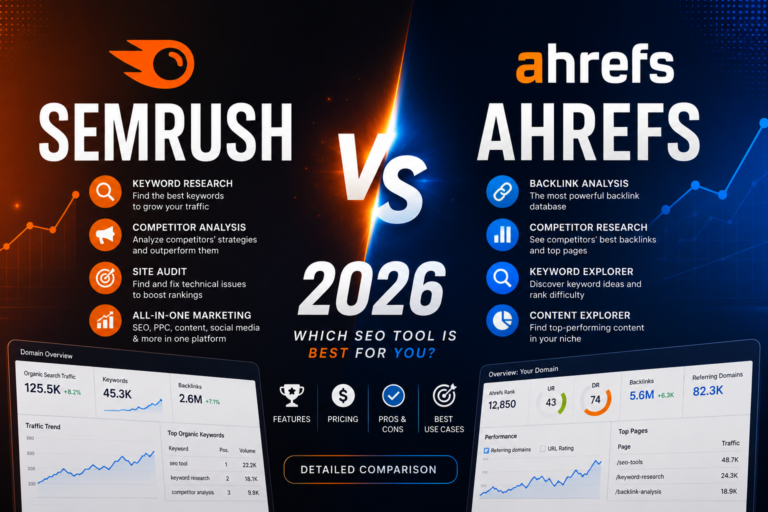
| Semrush | Agencies and enterprise teams needing the most complete all-in-one SEO suite | $139.95/month (Pro) | 7-day trial |
| Ahrefs | Technical SEO and backlink analysis with reliable keyword data and site explorer | $129/month (Lite) | No (48-hour trial for $7) |
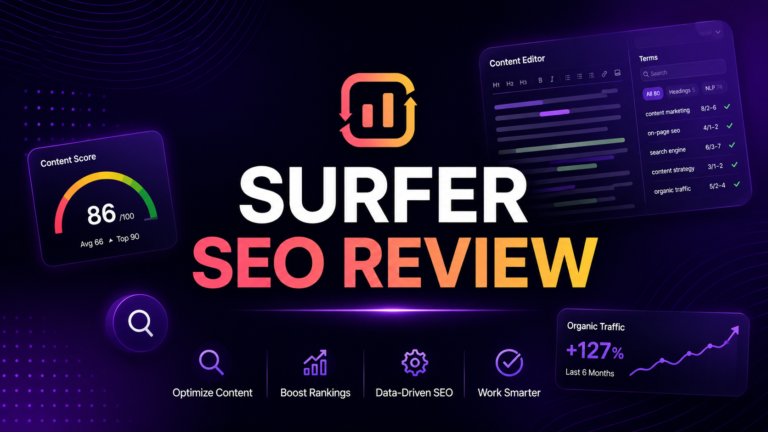
| Surfer SEO | Content teams needing keyword research integrated with content optimization scoring | $99/month (Essential) | 7-day trial |
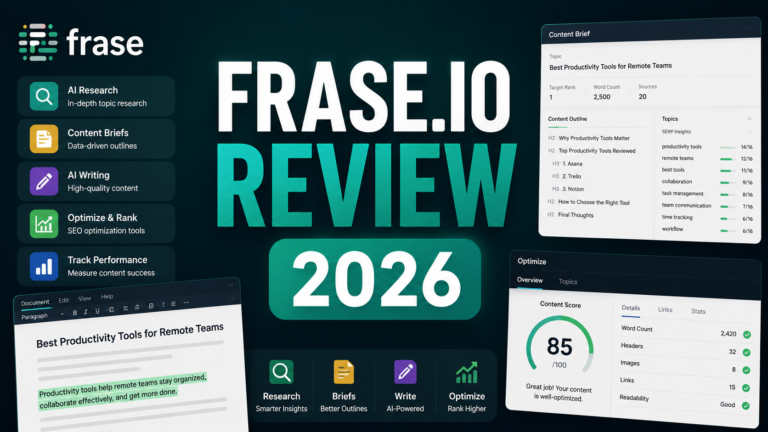
| Frase.io | Content creators who want AI-assisted brief creation and keyword optimization in one workflow | $45/month | 5-day trial |
| LowFruits | New sites and bloggers who need to find genuinely low-competition keywords by SERP quality | $25 (credits) / $29/month | Yes (limited free) |
| Mangools | Budget-conscious users and beginners who want reliable keyword data at accessible pricing | $29/month (Basic, annual) | 10-day trial |
| Keyword Insights | Agencies and content teams running large keyword clustering and content brief projects | $58/month (Basic) | $1 for 7 days |
| NeuronWriter | Content writers who want SERP analysis, keyword optimization, and AI writing in one tool | €19/month (Bronze) | Limited free plan |
“Pricing is subject to change. Always verify current pricing on the tool’s official website before purchasing.”
Detailed Reviews
1. Semrush
Best for agencies, enterprise SEO teams, and any organization that needs the most complete all-in-one SEO platform rather than a specialized tool.
Semrush is the broadest SEO platform in the market, covering keyword research, competitor analysis, site auditing, backlink analysis, rank tracking, content marketing, and local SEO from a single subscription. The AI features added through 2025 and 2026 include AI-driven keyword clustering, intent classification, and content gap analysis that surfaces keyword opportunities by comparing your site’s coverage against competitors’ ranked pages.
For keyword research specifically, the Keyword Magic Tool provides access to over 25 billion keywords with difficulty scores, CPC, search intent classification, and SERP feature analysis. The Topic Research tool identifies related topics and questions that support topical authority building. For agencies managing multiple client campaigns simultaneously, Semrush’s reporting, project management, and multi-site workflow tools consolidate what would otherwise require several separate tools.
Key features: Keyword Magic Tool with 25 billion-plus keywords, AI-driven topic clusters and intent classification, competitor keyword gap analysis, Semrush AI Writing Assistant with SEO scoring, site audit with 130-plus on-page checks, rank tracking, and backlink analysis.
Pros: Most complete all-in-one platform; AI intent classification reduces manual SERP assessment; competitor gap analysis surfaces keyword opportunities that pure volume research misses; agency reporting tools and project management are included.
Cons: Pro plan at $139.95 per month is the highest entry price on this list; the breadth of features creates a learning curve for users who only need keyword research; keyword volume data for lower-traffic queries can be less precise than Ahrefs on small niche sites.
Pricing: Pro $139.95/month (5 projects, 500 keywords tracked); Guru $249.95/month (15 projects, 1,500 keywords tracked); Business $499.95/month.
2. Ahrefs
Best for SEOs who prioritize reliable backlink data, technical site analysis, and keyword research that emphasizes click-through potential over raw volume.
Ahrefs’ keyword data is widely regarded as the most reliable in the category for click-based metrics. Rather than displaying only search volume, Ahrefs shows the estimated number of clicks per month on the search result, which accounts for Google’s increasing tendency to answer queries in the SERP without sending traffic anywhere. For keyword research in 2026 where AI Overviews frequently intercept informational queries, this click estimate is more useful than volume alone for predicting whether a ranking will generate actual traffic.
The Content Gap tool identifies keywords that competitors rank for that your site does not, enabling systematic identification of coverage gaps. Keywords Explorer surfaces question-based and long-tail variations with accurate difficulty scores based on backlink profile requirements rather than domain authority estimates.
Key features: Keywords Explorer with click-based traffic estimates across 10 search engines, Content Gap for competitor keyword comparison, Site Explorer for backlink and organic traffic analysis, rank tracker with SERP feature monitoring, Site Audit for technical SEO, and Web Analytics for traffic data without Google Analytics dependency.
Pros: Most reliable click-based keyword data; Content Gap analysis is the strongest competitive research feature in the category; backlink database depth exceeds Semrush for most niche markets; keyword difficulty scores accurately reflect backlink requirements.
Cons: Entry at $129/month for Lite is high and limits tracked keywords and projects; no free plan; the $7 trial is limited and primarily an evaluation tool rather than a functional research session.
Pricing: Lite $129/month (5 projects, 750 tracked keywords); Standard $249/month; Advanced $449/month.
3. Surfer SEO
Best for content teams who want keyword research and content optimization scoring in one workflow, reducing tool-switching between research and writing.
Surfer SEO integrates keyword research directly with real-time content scoring, which is the feature that distinguishes it from pure keyword research tools. Enter a target keyword and Surfer analyzes the top-ranking pages for that query, extracting NLP terms, structural patterns, word count ranges, and entity coverage that correlate with the rankings. The Content Editor displays a live content score as you write, updating with each paragraph to reflect how closely the content matches the patterns of currently ranking pages.
For content teams whose workflow involves both keyword selection and content production, this integration eliminates the step of exporting keywords from a research tool and importing targets into a content optimization tool. The Topical Map feature in 2026 maps a site’s content coverage against topical authority requirements, identifying clusters of content that should be created together rather than isolated articles.
Key features: Keyword research with SERP analysis, AI-powered content editor with real-time NLP scoring, Topical Map for content cluster planning, content audit for existing page optimization, SERP Analyzer for competitive content intelligence, and integrations with Jasper, Google Docs, and WordPress.
Pros: Best integration between keyword research and content optimization; Topical Map addresses topical authority building that pure keyword tools do not; real-time content scoring reduces editing cycles; Jasper and Docs integrations fit existing content workflows.
Cons: Content optimization focus means backlink and technical SEO analysis require Ahrefs or Semrush as a complement; $99/month Essential plan is expensive for solo creators; users who only need keyword research without content production pay for features they will not use.
Pricing: Essential $99/month (limited articles); Scale $219/month; Scale AI $289/month.
4. Frase.io
Best for content creators and small teams who want AI-generated content briefs, SERP analysis, and keyword optimization in the most accessible workflow in the category.
Frase combines keyword research, SERP analysis, and AI content generation in a single interface at a price point significantly below Surfer SEO and Semrush. Enter a keyword and Frase analyzes the top results, extracts headers, questions, and entity coverage from ranking pages, and generates a structured content brief. The AI writing assistant then drafts content from that brief using the identified keyword and entity targets.
For freelance writers, small agencies, and content marketers who produce 5 to 20 articles per month, Frase’s $45 per month starting price covers both research and content production in a workflow that would otherwise require Surfer for optimization and a separate AI writing tool for drafting.
Key features: SERP analysis extracting headers and questions from top-ranking pages, AI-generated content briefs from SERP data, AI writing assistant producing first drafts from brief context, content optimizer scoring articles against SERP data, and question research surfacing PAA and related queries.
Pros: Best price-to-workflow ratio for solo creators and small teams; brief generation from SERP data reduces research time; combining research and writing in one interface eliminates export-import workflow steps.
Cons: Keyword discovery database is less comprehensive than Semrush or Ahrefs for initial seed keyword research; content scoring is less precise than Surfer’s NLP model; best used in combination with a larger database tool for discovery, then Frase for brief creation and content scoring.
Pricing: Solo $45/month (1 user); Basic $115/month (3 users); Team $230/month (unlimited users).
5. LowFruits
Best for new sites, independent bloggers, and niche content producers who need to identify keywords where current top-ranking pages are genuinely weak and beatable.
LowFruits solves a specific problem that most AI keyword research tools do not address well: identifying keywords where the existing top-ranking pages are weak enough that a well-optimized article can realistically break through, regardless of the site’s domain authority. Instead of calculating difficulty based on domain authority averages, LowFruits scans the actual SERP and flags keywords where forums (Reddit, Quora), thin directories, or low-quality pages currently hold top positions.
For newer websites that cannot compete head-to-head with established domains on broad, high-competition keywords, this SERP weakness signal is a more reliable predictor of rankability than generic difficulty scores. The Weak Results filter is the single most valuable feature: keywords where weak pages hold positions are the opportunities worth targeting first when building topical authority from scratch.
Key features: SERP quality analysis flagging keywords where weak pages currently rank, Keyword Finder generating up to 5,000 keyword ideas from a seed, AI smart filters for competition assessment, bulk keyword processing for large lists, local SERP analysis, and question modifier integration for informational keyword mining.
Pros: SERP weakness signal is more accurate for predicting rankability on new sites than domain authority-based difficulty scores; Weak Results filter surfaces opportunities that difficulty tools miss; credit-based option at $25 for 2,000 credits allows low-cost evaluation; ideal first tool for content planning on new domains.
Cons: Limited keyword discovery capabilities; requires a separate source (Semrush, Ahrefs, or Google Keyword Planner) for initial keyword list generation before LowFruits analyzes them; credit system can deplete faster than expected on large keyword lists.
Pricing: Pay-as-you-go: $25 for 2,000 credits; monthly subscription from $29/month; yearly from $24/month.
6. Mangools
Best for budget-conscious users, beginners, and bloggers who need reliable keyword data without the learning curve or price point of enterprise platforms.
Mangools is a suite of five interconnected tools covering keyword research (KWFinder), SERP analysis (SERPChecker), rank tracking (SERPWatcher), backlink analysis (LinkMiner), and site analysis (SiteProfiler). KWFinder in particular is consistently praised for its clean interface and reliable difficulty scores that accurately reflect the competition level non-technical users will actually face when targeting a keyword.
The Basic plan at $29 per month on annual billing is the most affordable meaningful paid keyword research platform in this comparison, covering everything a solo blogger, affiliate marketer, or small business owner needs for consistent keyword research without paying the Semrush or Ahrefs premium.
Key features: KWFinder with keyword difficulty, volume, and CPC data, autocomplete and question-based keyword suggestions, SERPChecker for SERP analysis, SERPWatcher for rank tracking with daily tracking and reporting, LinkMiner for backlink research, and SiteProfiler for site authority analysis.
Pros: Most accessible interface in the category for non-technical users; Basic at $29/month (annual) is the most affordable complete keyword research suite; accurate difficulty scores for realistic competition assessment; 10-day trial allows thorough evaluation.
Cons: Keyword database is smaller than Semrush and Ahrefs for niche markets with limited search data; daily rank tracking limits on lower plans; less suitable for large-scale agency workflows where Semrush’s project management depth is required.
Pricing: Basic $29/month (annual), 100 keyword lookups/day; Premium $44/month (annual); Agency $89/month (annual).
7. Keyword Insights
Best for agencies and content teams running large-scale keyword research projects who need fast, accurate keyword clustering and AI-generated content briefs.
Keyword Insights is built specifically for the step in keyword research that comes after discovery: organizing a large keyword list into content-ready clusters. The SERP-based clustering algorithm groups keywords by actual search intent rather than semantic similarity alone, distinguishing between keywords that are related in meaning but belong on separate pages. This intent-accurate clustering reduces the content cannibalization risk that occurs when multiple pages target overlapping keywords without realizing they are competing.
The AI Writing Agent feature, available on Basic and Professional plans, allows delegating entire research and clustering workflows to an autonomous agent: “find me 1,000 keywords related to X and cluster them” executes end-to-end without manual steps. For agencies running month-long content sprints across multiple client sites, this autonomous research capability compresses the planning phase significantly.
Key features: SERP-similarity-based keyword clustering for intent-accurate grouping, AI Writing Agent for autonomous keyword research and clustering workflows, content brief generation from clustered keywords, AI writing assistant for draft production, search intent labels across all clustered keywords, and team sharing on Professional and Enterprise plans.
Pros: Most accurate keyword clustering in the category; intent-based grouping reduces cannibalization risk; AI Writing Agent automates large research projects; $1 for 7 days provides low-risk evaluation; Professional at $99/month covers 20,000 credits for typical agency content volumes.
Cons: Credit consumption on content briefs (100 credits each) and AI articles (1,200 credits each) depletes allowances faster than pure clustering work; requires a separate tool for backlink analysis and rank tracking; best as a complement to Semrush or Ahrefs rather than a standalone research platform.
Pricing: Basic $58/month (10,000 credits, 1 user); Professional $99/month (20,000 credits, 3 users); Enterprise custom; $1 for 7-day trial.
8. NeuronWriter
Best for content writers who want detailed SERP analysis, competitor term extraction, and AI writing assistance in one content optimization workflow.
NeuronWriter combines keyword research, SERP analysis, and AI writing in a single editor. The SERP analysis goes deeper than most competitors: for each target keyword, NeuronWriter shows the domain authority and page authority of every ranking page, the word count, the exact NLP terms those pages use most frequently, and competitor phrase priority filtering that surfaces terms your competitors include consistently. The Competitor Phrases Priority filter is the specific feature that most distinguishes NeuronWriter: it identifies NLP terms that appear across multiple top-ranking pages, suggesting that including those terms lifts topical strength faster than trying to identify them manually.
WordPress integration is a practical convenience that Surfer SEO does not provide natively: NeuronWriter connects directly to WordPress for publishing optimized content without a separate export step.
Key features: SERP analysis with domain authority, page authority, and NLP term frequency for each ranking page, Competitor Phrases Priority for identifying high-impact content terms, AI writing assistant generating drafts against the keyword target, WordPress integration for direct publishing, internal linking suggestions, and plagiarism checker.
Pros: Deepest per-SERP analysis of any tool in this comparison; Competitor Phrases Priority filter surfaces high-impact terms that improve topical coverage efficiently; lifetime deal option at approximately $109 provides exceptional value for solo creators compared to ongoing subscriptions; WordPress integration is unique among optimization tools.
Cons: Monthly subscription at €19 to €97 covers limited projects at lower tiers; keyword discovery database is less comprehensive than Semrush or Ahrefs; best as an optimization tool rather than a primary keyword discovery platform.
Pricing: Bronze €19/month (2 content editors), Silver €37/month, Gold €57/month, Platinum €77/month, Diamond €97/month; lifetime deal available at approximately $109.
Frequently Asked Questions
How has AI Overviews in Google Search changed which keywords are worth targeting in 2026?
AI Overviews have shifted the ROI calculation for informational keywords in a way that every keyword research workflow now needs to account for. When a query triggers an AI Overview, the organic results below the overview receive significantly fewer clicks than they would have before the feature existed, because Google answers the question before the user needs to click anywhere. This makes informational keywords with navigational or commercial modifiers more valuable than pure informational queries. It also makes ranking-as-cited-source in the AI Overview more valuable than ranking in position 3 below it. For keyword research in 2026, the most important filter added to any discovery workflow is: does this query type typically trigger an AI Overview, and if so, does my content have a realistic chance of being cited in it based on topical authority, E-E-A-T signals, and content structure? Tools like Semrush and Ahrefs are beginning to surface SERP feature data that includes AI Overview triggers, but this analysis is still partially manual.
Do I need both a keyword discovery tool and a content optimization tool, or can one platform cover both?
The most effective keyword research stacks in 2026 typically use two tools with limited overlap: a large database tool for discovery and competition analysis (Semrush, Ahrefs, or Mangools), and a content optimization tool for the creation phase (Surfer SEO, Frase, or NeuronWriter). The discovery tools have the keyword databases, backlink data, and rank tracking that content tools cannot replicate. The optimization tools have the real-time SERP analysis and NLP scoring that pure keyword tools do not provide. Trying to do serious keyword discovery in NeuronWriter or Frase produces incomplete results because their databases are smaller. Trying to optimize content in Semrush or Ahrefs produces suboptimal results because their content scoring is less precise. The one exception is for very budget-constrained solo creators where Frase at $45 per month covers both discovery (limited) and optimization in one subscription. For everyone with meaningful content volume, a two-tool stack delivers better results than forcing either category to cover both jobs.
What is the most cost-effective keyword research stack for a content site generating under $3,000 per month?
Three configurations cover most content sites at this revenue level without overinvesting in tools relative to revenue. The starter stack at approximately $54 per month combines Mangools Basic at $29 per month for keyword discovery, difficulty scoring, and rank tracking with LowFruits pay-as-you-go credits ($25 for 2,000) for identifying genuinely weak SERP opportunities that Mangools difficulty scores might not surface. The mid-level stack at $74 per month replaces LowFruits credits with a monthly subscription and adds Frase at $45 per month for content briefs and optimization. The advanced stack at approximately $128 per month combines Mangools with Keyword Insights at $58 per month for clustering large keyword lists and generating structured content briefs. Semrush and Ahrefs are worth the investment when the site surpasses $5,000 to $10,000 per month in revenue and needs the full data infrastructure those platforms provide. Below that threshold, the combination of a smaller database tool with a specialized optimization or clustering tool provides comparable research quality for the content volumes involved.
Final Recommendation
The right keyword research stack in 2026 maps to the stage of the content operation, the technical sophistication of the team, and which specific part of the research workflow is the current bottleneck.
For agencies and enterprise SEO teams who need the most complete all-in-one platform with AI-driven topic clustering, Semrush at $139.95 per month covers every function of the keyword research workflow from discovery through rank tracking.
For technical SEOs and content operations that prioritize reliable click-based data, backlink analysis, and accurate difficulty scoring, Ahrefs at $129 per month is the most trusted database in the category.
For content teams whose workflow moves directly from keyword selection into content production, Surfer SEO at $99 per month integrates keyword research and real-time content optimization scoring in a single interface that reduces tool-switching.
For agencies and large content teams who need intent-accurate keyword clustering across large datasets, Keyword Insights at $58 per month with a $1 trial produces the most accurate clustering in the category at a fraction of the enterprise tool cost.
For new sites and budget-conscious bloggers who need to find genuinely beatable keywords rather than volume-rich impossible targets, LowFruits’ credit-based SERP weakness analysis at $25 for 2,000 credits delivers the most actionable early-stage research value per dollar.
For content writers who want SERP analysis, competitor term extraction, and AI writing in one tool, NeuronWriter’s lifetime deal at approximately $109 provides sustainable long-term value that no monthly subscription can match at that price point.
Start by identifying which stage of the research workflow produces the most friction in your current process. Buy one tool that specifically addresses that stage. Add a second tool only when the first is fully integrated and the next bottleneck is clearly identified.