Pika AI Review 2026: Stunning Clips or Overhyped? We Tested It
Not every AI video tool is trying to be the same thing. Runway is building a professional production platform. Kling is chasing photorealistic benchmark scores. Pika has made a different bet since its launch: it is the most fun, fastest, and most creatively playful AI video tool available, and it does not apologize for having a ceiling.
That positioning still works in 2026. Pika has grown from a Discord-based experiment into a full web and mobile platform running on the Pika 2.5 engine, with physics-aware generation, creative transformation tools, AI-generated sound effects, and the fastest generation speed in the category. Creators running entire Instagram accounts on Pika’s free plan are not an edge case. They are a common and visible use pattern that reflects what this tool is actually built for.
The question for any buyer is not whether Pika is impressive. It clearly is for what it does. The question is whether what it does matches what you need.
Our Take: Great for short social clips, weak on anything longer than 5 seconds. It’s the most accessible AI video tool available right now but don’t expect Runway level output at this price point.
Also working in 3D? See our Tripo AI review for the fastest AI 3D generator we tested.
What Pika AI Is and Who It Is For
Pika AI, developed by Pika Labs, is a browser and mobile-based AI video generation platform that converts text prompts and images into short stylized video clips. The platform prioritizes speed, creative control over visual effects, and a low-friction workflow that requires no editing experience. Type a prompt, apply an effect, and share directly from the platform or download for publishing, all within a workflow that most users describe as complete within a coffee break.
The current generation engine, Pika 2.5, is built around what the company describes as physics-aware generation: the model understands weight, impact, liquid flow, and material behavior rather than simply predicting motion patterns. A punch lands with physical conviction. A balloon squishes with appropriate deformation. Water pours with realistic surface behavior. This physics layer separates Pika 2.5’s outputs from earlier AI video generations that produced movement without weight.
Pika is genuinely the strongest fit for four creator types:
Social media creators producing content for TikTok, Instagram Reels, and YouTube Shorts who need high-volume, fast-turnaround clips with visual hooks. Pika’s generation speed of roughly 12 seconds for standard clips, compared to 8 to 12 minutes for Kling and 20-plus minutes for Runway, makes iterative social content production practical rather than painful.
Marketers and brand content teams running product teasers, ad creative variants, and promotional clips at volume. The Pikaswaps feature allows swapping objects or elements within a scene, enabling quick product variant visualization without reshooting.
Creative experimenters who want to explore AI-generated visual concepts rapidly without committing budget to professional production tools. Pika’s free tier with 80 monthly credits provides enough access to evaluate most core features.
Meme creators and viral content producers who use Pikaffects, Pikatwists, and the transformation tools to produce the kind of physics-driven absurdist content that performs well on algorithm-driven feeds.
Pika is the wrong tool for users who need clips longer than 10 seconds without stitching, photorealistic human content where the AI-generated quality will be scrutinized, precise camera control through motion brush or director-mode tools, or multi-shot narrative production with character consistency across scenes.
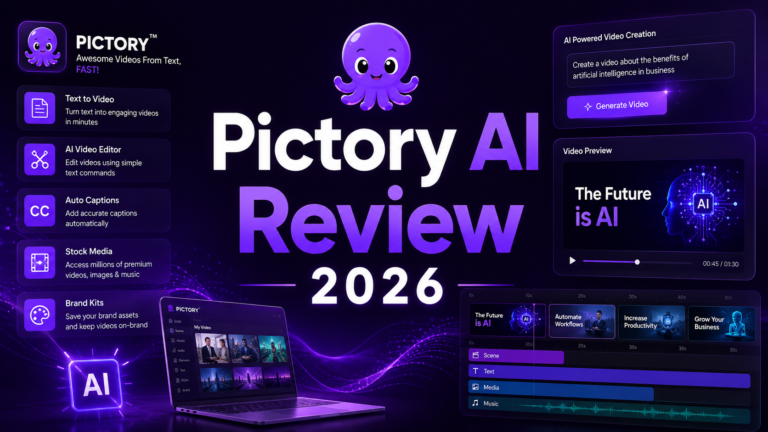
Key Features
Pika 2.5 with physics-aware generation. The current engine models physical interactions with significantly more accuracy than earlier AI video models. Objects respond to weight and force. Liquids flow with surface tension behavior. Impacts produce reactions that follow basic physics rather than generating random adjacent motion. The result is that action-heavy clips, effects sequences, and transformation content feel intentional rather than accidental.
Pikaffects: physics-driven creative transformations. Pikaffects are a suite of physics-based visual effects applied to generated or uploaded content: explode, inflate, deflate, melt, crumble, squish, and more. These effects apply physical simulation to any element in a scene and are genuinely among the most distinctive creative tools in the AI video category. The explode effect, which shatters an object outward with debris physics, and the melt effect, which collapses a subject with fluid dynamics, produce results that consistently perform well on social platforms. No other major AI video tool offers a comparable effects library at this level of physical accuracy.
Pikatwists: style transformation across existing clips. Pikatwists apply visual style filters to uploaded video content, converting live footage or AI-generated clips into anime, 3D animation, watercolor, film noir, and other aesthetic treatments. This makes Pika useful not just for generation from scratch but for stylistic transformation of existing creative assets.
Pikaswaps and Pikadditions. Pikaswaps allow replacing elements within a scene through a text command: swap the subject’s clothing, change the background, replace an object. Pikadditions insert new elements into existing scenes, generating objects that match the lighting and perspective of the source material. Both tools reduce the need to regenerate from scratch when a partial adjustment would produce the desired result.
Pikaframes: start and end frame control. Users specify both the opening and closing frames of a generated clip, and Pika generates the visual transition between them. This provides precise control over clip boundaries that pure text-to-video prompting cannot reliably deliver, making it particularly useful for product reveals, object transformations, and narrative transitions where exact composition matters.
Integrated sound effects and lip sync. Pika 2.5 generates synchronized sound effects automatically based on the action in the video. A vehicle collision generates impact audio. An explosion generates blast sound. The lip sync feature has been upgraded in 2026 to handle complex facial expressions, enabling basic character dialogue work without a separate audio production pipeline.
Fast generation across web and mobile. Generation times for standard 5-second Turbo mode clips run approximately 12 seconds. Pro model generations at higher quality settings take longer but remain significantly faster than competing tools. The mobile app provides full generation capability, enabling content production away from desktop without feature reduction.
Pros and Cons
Pros:
- Fastest generation speed in the AI video category for standard clips; 12-second turnaround makes social content iteration practical
- Pikaffects physics library is a genuinely unique creative capability with no direct competitor equivalent
- Most accessible paid entry point in professional AI video: $8 per month for Basic removes the watermark barrier
- Free tier with 80 monthly credits is usable for evaluating all core features without payment
- Pikaframes start-and-end frame control provides compositional precision that prompt-only tools cannot match
- Integrated sound effect generation eliminates a separate audio production step for effects-heavy content
- Lowest learning curve of any AI video tool; most users produce shareable content within the first session
- Mobile app provides full platform capability for on-the-go production
Cons:
- 10-second maximum clip duration caps storytelling capability; anything narrative-driven requires stitching multiple generations
- Photorealistic human content frequently shows visible AI generation artifacts; not suitable when realism will be closely scrutinized
- No motion brush, director mode, or pose control; camera behavior is text-directed without granular creative control tools
- Monthly credits do not roll over; unused allocation is lost at billing cycle reset
- Standard plan at $10 per month removes the watermark but does not include commercial use rights, which require the Pro tier at $35 per month
- Credit consumption for high-quality features depletes allocations faster than users often expect; a single high-quality 10-second clip with Pikaffects can consume 50-plus credits
- Character consistency across multiple generations is weaker than Kling and Runway for production requiring a recognizable subject across shots
Pricing Breakdown
Pika uses a credit-based model across four plan tiers. Credit costs vary by model (Turbo versus Pro), resolution (720p versus 1080p), clip duration, and feature type. Credits do not roll over between billing periods. All paid plans are billed annually at the listed monthly equivalent rate.
Free: $0. 80 credits per month, access to Pika 1.5 and basic features. Watermarked output. No commercial use rights. Sufficient for evaluating the platform before committing to a subscription. A basic Turbo text-to-video generation costs 5 credits, covering approximately 16 simple generations on the free plan.
Basic: $8/month (annual billing). Removes the watermark, providing clean export for personal and portfolio use. Still does not include commercial use rights. The pricing is the lowest watermark-free entry point in the professional AI video category. Primarily suited for hobbyists and creators who want clean output without commercial application.
Standard: $10/month (annual billing). 700 credits per month, faster generation queues, access to Pika 2.2 and all AI models. Watermark-free. Still does not include commercial use rights, which remains a significant limitation for any professional or brand application. At standard generation rates (18 credits for a 5-second 1080p Pika 2.2 clip), 700 credits supports approximately 38 standard quality clips per month.
Pro: $35/month (annual billing). 2,300 credits per month, commercial use rights, fastest generation priority, and access to all Pika 2.5 features and Pikaffects at full quality. This is the first plan appropriate for professional use. At standard Pika 2.5 rates, 2,300 credits covers meaningful weekly production volume for social content workflows.
Fancy: $76/month (annual billing). 6,000 credits per month, all Pro features, premium generation speed. Designed for high-volume production pipelines, agencies, and content operations generating multiple pieces of content daily.
“Pricing is subject to change. Always verify current pricing on the tool’s official website before purchasing.”
How It Compares to Runway ML and Kling AI
Pika vs Runway ML
Runway and Pika serve genuinely different production philosophies. Runway is a professional production environment: its Gen-4.5 model produces cinematic-quality output with precise camera control, multi-file editing through Aleph, timeline-based assembly, and native professional software integrations. The tradeoff is speed, with Runway generating clips over 20 minutes on standard load, and cost, with Runway Standard at $12 per month but significant credit costs at professional quality.
Pika is the creative iteration tool. Its 12-second generation speed and Pikaffects library make rapid experimentation practical. Where Runway is designed to produce the best single output for a professional deliverable, Pika is designed to produce twenty outputs quickly so a creator can find the best one.
The practical split: Runway for professional production where cinematic quality, camera control, and editing depth justify higher cost and slower pace. Pika for social content at volume where speed, creative effects, and low entry cost are the primary values.
Pika vs Kling AI
Kling holds the number one benchmark score for AI video quality among consumer tools as of February 2026, produces clips up to three minutes versus Pika’s 10-second maximum, and matches Pika on pricing at comparable tiers. Kling’s photorealistic human motion is consistently rated above Pika for content where the subject is human and visual realism is the goal.
Pika’s advantages over Kling are speed, creative effects, and accessibility. Kling generates clips in 8 to 12 minutes; Pika generates in 12 seconds. Kling has no equivalent to Pikaffects, Pikatwists, or Pikaframes. And Pika’s interface is meaningfully simpler, producing its first-session usable outputs more quickly than Kling’s slightly more complex platform.
The practical split: Kling for photorealistic human content, longer clip duration, and production where benchmark quality justifies slower generation. Pika for speed-dependent workflows, creative effects-driven content, and users who want the most immediate and playful generation experience in the category.
Frequently Asked Questions
Is Pika AI actually free, and what can you do on the free plan?
Yes, genuinely free with no credit card required. The free plan provides 80 credits per month with access to Pika 1.5 and most core creative tools. At 5 credits for a basic Turbo generation and 10 credits for standard Pikaffects, 80 credits supports approximately 8 to 16 generations per month depending on the feature mix. Free plan videos carry a Pika watermark and do not include commercial use rights, making the free tier appropriate for experimentation and personal sharing but not for brand or client deliverables. The Basic plan at $8 per month removes the watermark without adding commercial rights; the Pro plan at $35 per month is the entry point for any commercial application. The free plan is one of the more genuinely useful evaluation tiers in AI video, providing enough access to form a real opinion about the tool before paying.
How many videos can I realistically produce per month on the Pro plan?
This varies substantially based on which features you use. At standard rates: a simple 5-second Turbo text-to-video generation costs approximately 5 credits. A 5-second, 1080p Pika 2.2 standard generation costs approximately 18 credits. A 10-second Pika 2.5 Pro generation with Pikaffects can consume 50 or more credits depending on effect complexity. On the Pro plan’s 2,300 monthly credits, a creator using primarily standard 1080p generations can produce approximately 120 clips per month. A creator using heavy Pikaffects on longer clips might produce 40 to 50. The most practical approach is to use Turbo mode for ideation and experimentation, reserving Pro model generations for the clips you actually intend to publish. This two-tier approach significantly extends the effective monthly output without increasing plan cost.
Can Pika AI generate content that passes as real video footage?
For most social media applications involving objects, environments, and stylized content, Pika 2.5 outputs are convincing enough to share without disclosure. For human-subject content where the face, skin texture, and movement will be closely watched, Pika’s photorealistic ceiling shows visible AI generation artifacts more frequently than Kling or Runway. Viewers familiar with AI video will often identify Pika outputs as generated when the subject is human and the lighting requires photorealistic skin rendering. For effects-driven content, branded visual sequences, product animation, and abstract or stylized creative work, the realism bar is lower and Pika consistently clears it. The tool’s own community openly describes it as best for stylized and effects-heavy content rather than photorealism, and that honest positioning should guide what you use it for.
Final Verdict
Pika AI earns its position as the social content creator’s AI video tool of choice in 2026. The generation speed, Pikaffects creative suite, Pikaframes compositional control, and genuinely usable free tier combine to make it the most fun and lowest-barrier entry point in AI video generation. No other tool produces TikTok-ready effects content as fast, with as little friction, at as low a starting price.
The honest limitations are equally clear. The 10-second clip ceiling, weaker photorealistic human output, absence of granular camera control, and the commercially awkward tier structure where commercial rights require the $35 Pro plan rather than the $10 Standard plan are real constraints that will push some users to Kling or Runway. The credit system’s lack of rollover punishes inconsistent production schedules.
For creators who produce social content multiple times per week, want physics-driven creative effects that no competitor matches, and need generation speed that fits a content calendar rather than a production timeline, Pika Pro at $35 per month is one of the most practical AI tool investments in the category.
For creators who prioritize photorealistic quality, longer clip duration, or professional camera control, Kling or Runway are the better tools. Pika knows what it is and does it exceptionally well.
Rating: 4.1 / 5