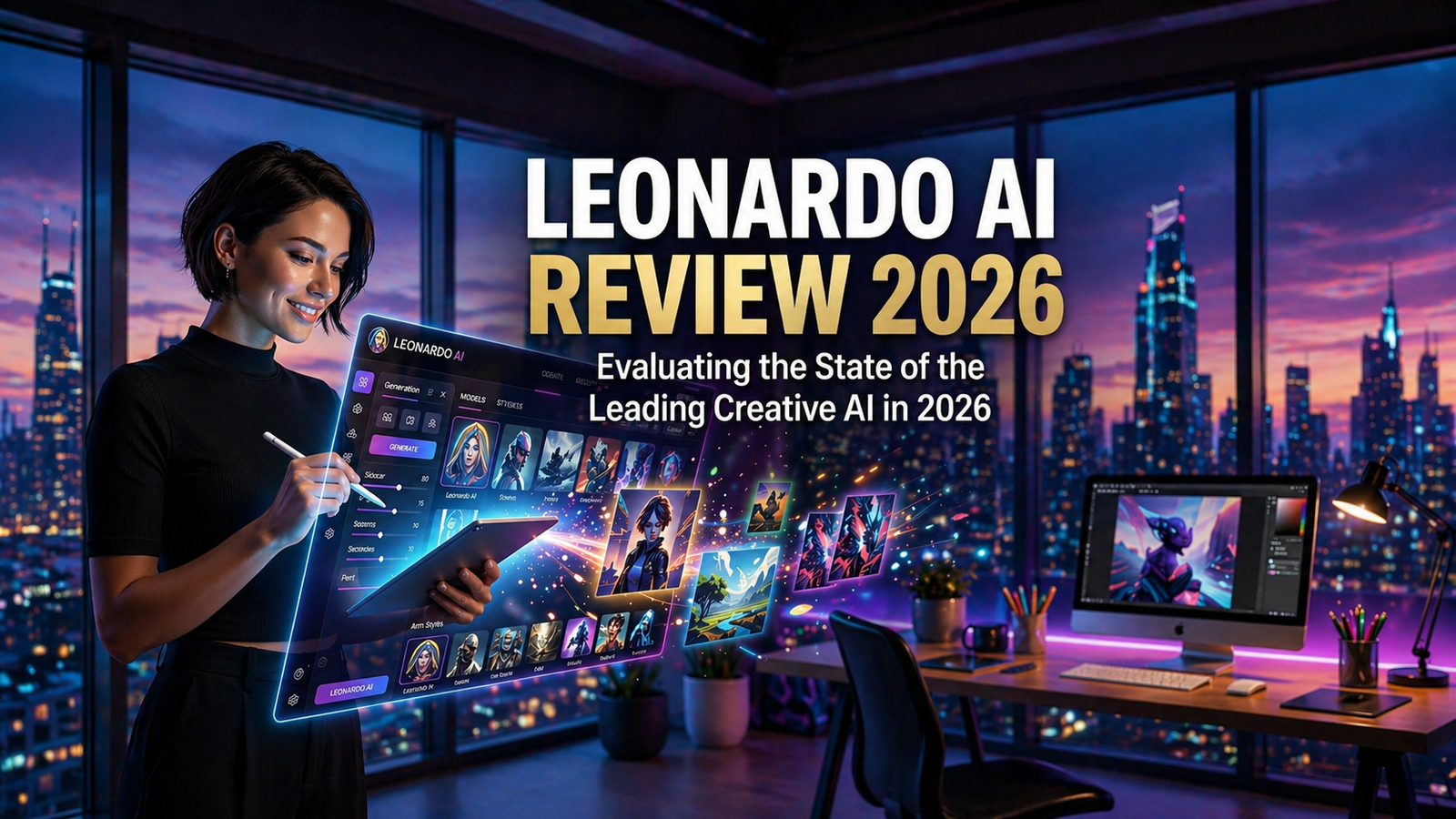
Leonardo AI Review 2026: The Midjourney Rival Worth Switching To?
Most AI image generators ask you to pay before you understand whether the tool fits your workflow. Midjourney has no free tier at all. Adobe Firefly offers a small initial credit allocation before requiring a subscription. DALL-E access requires a ChatGPT Plus subscription.
Leonardo AI takes the opposite approach. The free plan provides 150 tokens every single day, resetting automatically at no cost and with no credit card required. At standard generation rates, that is approximately 25 to 37 images per day, indefinitely. For a creator who wants to evaluate a professional-grade AI image platform without financial commitment, there is no more accessible entry point in the market.
What makes this more interesting is that the daily free token model sits on top of a genuinely capable tool. The Phoenix model, AI Canvas with inpainting and outpainting, custom LoRA model training, the Consistent Character Engine, 3D texture generation, and Motion video animation are not superficial features. They are the same capabilities that game studios, concept artists, and production designers use to build real asset pipelines. The free tier lets anyone experience all of that with enough daily volume to form a real opinion before spending anything.
Our Take: Underrated and underpriced. Leonardo gives you more control over image style than Midjourney at a fraction of the cost. The interface takes getting used to but the output quality is genuinely competitive.
If your work extends into 3D, see our Tripo AI review and Meshy AI review for the tools leading AI 3D generation in 2026.
What Leonardo AI Is and Who It Is For
Leonardo AI is a cloud-based generative AI platform for image creation, video animation, 3D texture generation, and creative visual production. It runs on a token-based system and is accessible entirely through a web browser at leonardo.ai, with no Discord requirement and no local GPU needed. The platform was originally oriented toward game asset production and concept art but has expanded into marketing visuals, architectural design, character design, fashion, product photography, and general creative illustration.
The flagship Phoenix model handles text-to-image generation with strong prompt adherence, accurate text rendering within images, and high-fidelity detail on textures that earlier models handled inconsistently. Motion generation animates static images into short video clips. The AI Canvas provides an infinite editing workspace for inpainting, outpainting, and element-level editing. Custom model training allows users to upload their own reference images and train private LoRA models that generate consistent style outputs aligned to their specific aesthetic.
Leonardo serves four distinct user profiles particularly well:
Game developers and concept artists who need high-volume, technically precise asset generation across characters, environments, weapons, and UI elements. The 3D texture generation feature, which produces albedo, normal, and roughness maps from text prompts, directly addresses game development pipeline needs that other image generators do not specifically serve.
Freelancers and independent creators who need professional-grade output with commercial rights at accessible price points. The Artisan plan at $24 per month provides API access, multiple LoRA training sessions, and the full feature suite at a price that competes directly with Midjourney Standard at $30 per month while including capabilities Midjourney does not offer.
Marketing teams and brand designers who need consistent visual style across campaigns. The Consistent Character Engine maintains facial features and proportions across multiple generations, enabling brand-coherent character work that random generation cannot replicate. Custom LoRA training allows building a model that generates on-brand visual assets automatically.
Hobbyists and casual creators who want the broadest feature access without financial commitment. The daily reset free tier is genuinely the most generous in the market for this use case.
Key Features
Phoenix model with text accuracy and high-fidelity detail. Phoenix is Leonardo’s flagship generation model, built specifically for accurate prompt interpretation and superior rendering of textures, human skin, complex materials, and legible text within images. Where earlier AI image generators regularly failed on text rendering and often produced generic interpretations of specific prompts, Phoenix follows descriptive prompts closely enough to be practical for commercial design work. Multiple LoRA style modifiers can be layered onto Phoenix generations, enabling stylistic control beyond what pure prompting achieves.
AI Canvas: inpainting, outpainting, and element-level editing. The AI Canvas is an infinite workspace that transforms Leonardo from a generation-only tool into an editing environment. Inpainting allows selecting any region of an existing image and replacing or modifying it through a text prompt, without affecting the surrounding composition. Outpainting extends images beyond their original borders, generating new content that matches the established visual context. This canvas workflow enables iterative refinement rather than requiring full regeneration when a single element needs adjustment.
Consistent Character Engine. The Consistent Character Engine maintains a character’s facial features, proportions, and visual identity across multiple generations with different poses, expressions, angles, and environments. This is a critical capability for character design work in games, comics, and brand campaigns where visual coherence across a series of images is a non-negotiable requirement.
Custom LoRA model training. Paid subscribers can upload reference images and train private LoRA models that generate outputs in their specific style, with their specific character designs, or matching their specific aesthetic. The Apprentice plan at $12 per month includes one LoRA training session per month. The Artisan plan at $24 per month provides multiple sessions. The Maestro plan includes up to 20 LoRA training sessions monthly, supporting rapid iteration across multiple projects simultaneously.
3D texture generation. Leonardo generates PBR (Physically Based Rendering) texture maps including albedo, normal, and roughness maps directly from text prompts. These outputs are compatible with Unity, Unreal Engine, and other major game engines without requiring post-processing in dedicated texture tools. For game developers, this collapses a step that previously required either specialist software or significant manual work.
Motion video generation. The Motion feature animates static images into short video clips using first-party Motion models. Motion 1.0, Motion 2.0, and Motion 2.0 Fast are available to all paid subscribers, with unlimited generation available even after fast tokens are exhausted. For marketing teams that need to bring product images to life for social media, this feature eliminates the need for a separate video generation subscription for basic animation work.
Realtime Canvas for instant generation. Realtime Canvas provides near-instant preview generation as users sketch or describe their vision, enabling rapid creative exploration before committing tokens to high-quality final generation. The feature is particularly useful for iterating on composition, color palette, and overall visual direction before producing polished final assets.
Pros and Cons
Pros:
- Most generous free tier in the AI image generation market: 150 tokens per day, daily reset, no credit card required
- Phoenix model delivers among the best text rendering within images of any consumer AI image generator
- Consistent Character Engine enables character-consistent series work that random generation cannot replicate
- Custom LoRA training builds proprietary style models from your own reference images, a capability Midjourney does not offer at any tier
- 3D texture generation directly serves game development pipelines with no competitor equivalent at this price point
- Rollover token bank on paid plans saves unused monthly tokens rather than losing them at billing reset
- Full commercial rights and IP ownership for paid subscribers on all generated images
- Motion generation included in paid plans without separate subscription cost
- 4.6 out of 5 Trustpilot rating reflects genuine user satisfaction with output quality and support
Cons:
- Free tier generates public images by default; private generation requires paid subscription, creating a visibility concern for commercially sensitive creative work
- Token costs vary substantially by model, resolution, and feature, making monthly output prediction difficult without experience on the platform
- The Consistent Character Engine and LoRA training, the two most distinctive features, are not available on the free plan, meaning the free tier understates what makes Leonardo special
- Generating complex mechanical and inorganic objects produces inconsistent results requiring multiple regeneration attempts
- Parallel generation jobs on the free plan are limited; paid plans unlock concurrent generations essential for production-speed workflows
- Free tier IP ownership is less clear than paid tier ownership; Leonardo’s terms grant them broader rights on free tier public generations
Pricing Breakdown
Leonardo operates on a token-based system where generation cost varies by model, resolution, feature usage, and number of variations generated. Token costs are not fixed per image, which requires users to develop a sense of their typical usage pattern before selecting a plan.
Free: $0. 150 tokens per day with daily reset. Access to Phoenix 2.0 and standard features. Generations are public by default and visible to the community gallery. No Consistent Character Engine access. No LoRA training. Commercial use granted through a non-exclusive license, though Leonardo retains broader rights to public free-tier generations. No credit card required.
Apprentice: $12/month ($10/month annual, approximately $120/year). 8,500 monthly tokens. Private generations. Consistent Character Engine access. One LoRA training session per month. Two concurrent generation jobs. Priority generation speed. Full commercial rights and IP ownership. Token rollover bank up to 25,500 saved tokens. The minimum plan for any creator who needs private outputs or character consistency.
Artisan: $24/month ($20/month annual). 25,000 monthly tokens. Multiple LoRA training sessions per month. API access for custom workflow integration. Relaxed Generation after fast tokens are exhausted (slower queue, no additional cost). Up to four concurrent generations. The professional sweet spot for most serious individual creators and small teams.
Maestro: $48/month ($40/month annual). 60,000 monthly tokens. Twenty LoRA training sessions per month. Ten concurrent generation jobs. Maximum priority in the generation queue. Rollover bank up to 180,000 tokens. Designed for studios, agencies, and high-volume production pipelines.
“Pricing is subject to change. Always verify current pricing on the tool’s official website before purchasing.”
How It Compares to Midjourney and Adobe Firefly
Leonardo AI vs Midjourney
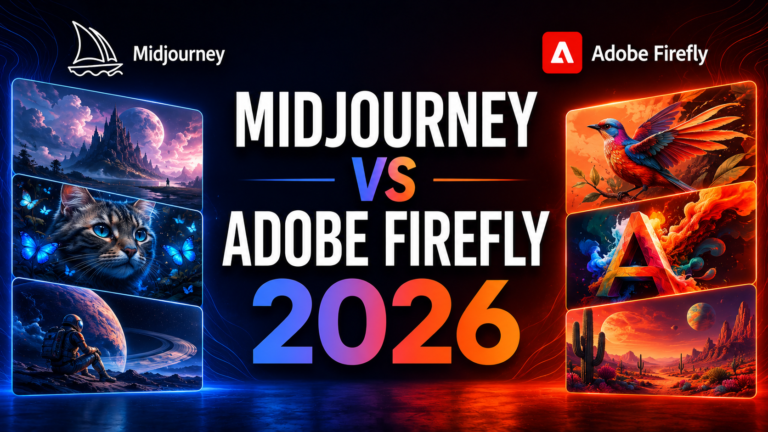
Midjourney holds its position as the benchmark for artistic quality and visual impact in AI image generation. Its V7 and V8 Alpha outputs have a distinctive cinematic, painterly aesthetic that independent comparisons consistently rate above Leonardo for purely creative artistic work. For concept art, editorial illustration, and any project where visual impact is the primary metric, Midjourney’s ceiling is higher.
Leonardo competes by offering more. At $12 per month versus Midjourney’s $10 minimum, Leonardo includes custom LoRA training, the Consistent Character Engine, 3D texture generation, AI Canvas with inpainting and outpainting, and Motion video generation. Midjourney has no equivalent to any of those features at any price tier. For users who need creative control beyond the initial generation, Leonardo’s editing and training capabilities address workflow needs that Midjourney’s generation-only model does not serve.
The pricing comparison also changes when the free tier is considered. Leonardo’s daily token model allows indefinite free evaluation. Midjourney has no free tier at all. For users evaluating before committing financially, Leonardo is the only serious platform that allows that evaluation.
Leonardo AI vs Adobe Firefly
Adobe Firefly and Leonardo serve different primary markets and the comparison is most relevant for creative professionals deciding which tool to add to their existing stack.
Firefly’s defining advantage is commercial safety. Its training exclusively on Adobe Stock and licensed content gives enterprise users and agency teams copyright indemnification that Leonardo does not offer equivalently. For client work where AI training data provenance is a legal or contractual requirement, Firefly is the more defensible choice.
Leonardo’s advantages over Firefly are creative flexibility and specialized creative features. The custom LoRA training for proprietary style models, the Consistent Character Engine, and the 3D texture generation capabilities exceed what Firefly offers in those categories at comparable standalone pricing. For Creative Cloud subscribers, Firefly is effectively bundled into an existing subscription, which changes the cost comparison significantly. For users outside the Adobe ecosystem, Leonardo Pro at $24 per month competes directly with Firefly Pro at $19.99 per month while offering capabilities Firefly does not match.
Frequently Asked Questions
Are images generated on Leonardo AI’s free plan actually public?
Yes. Free tier generations are public by default and appear in Leonardo’s community gallery, where they are visible to all platform users. Free users can technically toggle individual generations to private in some configurations, but the standard behavior is public output. If your creative work involves unreleased projects, proprietary character designs, client assets, or any material where public visibility creates a competitive or contractual problem, the free plan is not appropriate for that work. Private generation requires the Apprentice plan at $12 per month or above. This is the most important operational distinction between the free and paid tiers, and it is frequently not understood until after a user has generated several hundred images on the free plan and discovered their work has been publicly accessible throughout.
Does Leonardo AI include commercial rights for paid subscribers?
Yes, clearly. Paid subscribers on Apprentice, Artisan, and Maestro plans retain full ownership, copyright, and other intellectual property rights for all images they generate while subscribed. Leonardo explicitly states that it may use private paid-tier images only to provide services to the subscriber, not for other users or for model training. Free tier users receive a non-exclusive, royalty-free license for commercial use of their generated images, but Leonardo retains broader rights to use, reproduce, modify, and distribute public free-tier creations. For any commercial application where IP ownership is a clear requirement, a paid plan is necessary.
How does the token rollover bank work, and how much does it help?
Paid plans include a token rollover bank that saves unused monthly tokens rather than expiring them at the billing cycle reset. The maximum rollover accumulation varies by plan: 25,500 tokens on Apprentice, with higher caps on Artisan and Maestro. Accumulated rollover tokens are automatically used after fast monthly tokens are exhausted, providing a buffer for months with heavier-than-usual generation needs. The rollover bank is a meaningful advantage over competitors like Pika and early Midjourney credit systems that did not allow carryover. The practical caveat: rollover tokens are lost if you cancel your subscription. If you are approaching cancellation and have accumulated rollover tokens, consuming them before canceling is advisable.
Final Verdict
Leonardo AI earns its place as the most feature-rich AI image platform at its price point in 2026. The combination of Phoenix-quality generation, custom LoRA training, the Consistent Character Engine, 3D texture generation, AI Canvas editing, and Motion video animation in a single platform at $12 to $24 per month represents genuine value that no single competing tool matches at equivalent pricing.
The free tier’s 150 daily tokens with daily reset is the most generous evaluation experience in the market and the strongest argument for trying Leonardo before any competitor. Anyone considering an AI image tool subscription should spend a week on Leonardo’s free plan before paying for anything.
The honest limitations are real: public generation by default on the free tier is a significant caveat for commercially sensitive work, token cost variability makes budget prediction difficult for new users, and Midjourney’s raw artistic ceiling remains higher for purely aesthetic and creative outputs.
For game developers, concept artists, character designers, and production teams who need editing depth and custom model training alongside generation capability, Leonardo AI at the Artisan tier is one of the most defensible creative software investments available in 2026. For pure artistic output with no editing requirements, Midjourney is still the quality leader.
Rating: 4.4 / 5