ElevenLabs vs HeyGen 2026: Voice AI or Avatar Video?
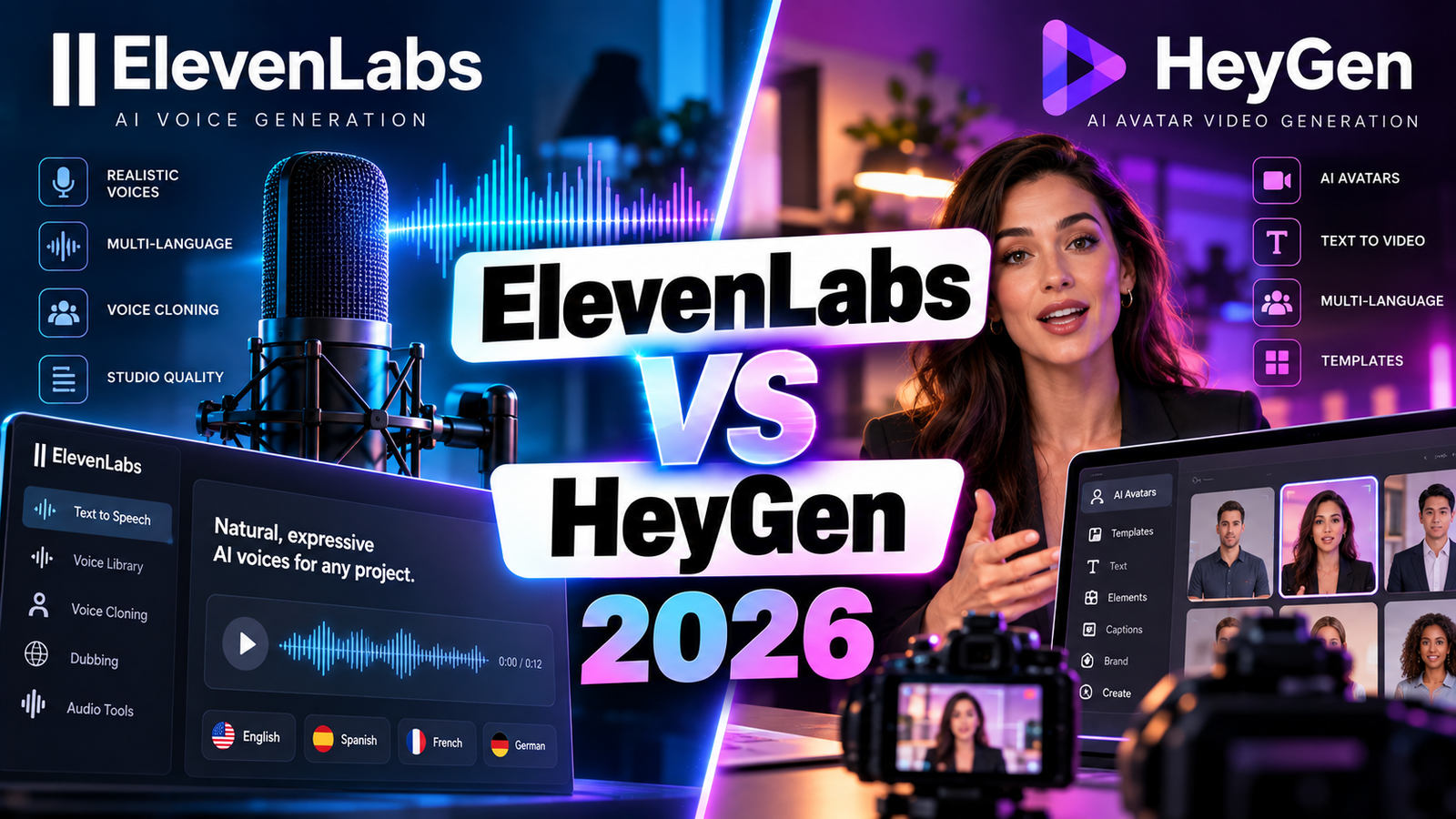
People search for this comparison constantly, and it is a slightly misleading matchup. ElevenLabs and HeyGen both sit in the AI media category, both are popular with creators and marketers, and both can turn a script into something a viewer can watch or hear. But they solve different problems. ElevenLabs is the leading AI voice and audio platform, built around voiceover, voice cloning, and dubbing. HeyGen is the leading AI avatar video platform, built around talking presenters and multilingual video. One produces sound. The other produces a finished on-screen person.
That difference matters because it changes what you actually pay for. If you need a narrator for a podcast, audiobook, or YouTube explainer, an avatar tool is overkill. If you need a presenter on screen for a sales video or a training module, a voice tool alone leaves you with half the job. A lot of creators end up using both, which is why this comparison is less about picking a winner and more about working out which one you need, or whether you need both.
You can read our complete breakdowns in the ElevenLabs Review 2026 and the HeyGen Review 2026. This piece focuses on how they compare head to head.
Comparison Table
| Feature | ElevenLabs | HeyGen |
|---|---|---|
| Core output | Audio: voiceover, cloned voices, dubbing, sound effects | Video: talking AI presenters and translated video |
| Voice quality | Industry benchmark for natural, expressive speech | Good for presenter video, not the benchmark |
| Avatars | None | 500-plus stock avatars, custom digital twin, Avatar IV |
| Languages | 70-plus for speech generation | 175-plus on paid plans for translation, 30-plus on Free |
| Voice cloning | Instant on Starter, Professional on Creator | Voice cloning on paid plans |
| Best use cases | Podcasts, audiobooks, voiceover, dubbing, game audio | Marketing, training, sales outreach, localized video |
| Free tier | 10,000 credits per month (about 10 minutes), no commercial use | 3 short watermarked videos per month |
| Starting paid price | $6/month ($5/month billed annually) | $29/month ($24/month billed annually) |
“Pricing is subject to change. Always verify current pricing on each tool’s official website before purchasing. ElevenLabs lists monthly prices with a discount for annual billing. HeyGen moved to credit-based pricing in 2026, so the real cost depends on which avatar model and features you use.”
Core Strength: Audio Versus Video
The cleanest way to separate these tools is by what you get when you press generate.
ElevenLabs gives you an audio file. You type or paste a script, pick or clone a voice, and receive speech you can drop into any editor, podcast host, audiobook platform, or game engine. It also covers dubbing, where existing audio or video is translated into other languages, and sound effects. Everything it makes is audio first, and it is built to slot into whatever visual workflow you already have. It does not offer a talking-avatar video product comparable to HeyGen’s.
HeyGen gives you a finished video with a person in it. You write a script, choose an avatar or build a digital twin of yourself, and HeyGen renders a presenter delivering the script with matched lip movement and gestures. Its video translation feature takes an existing video and re-voices it in another language while syncing the lips. The deliverable is something you can publish directly, with no camera, no studio, and no editing timeline required for simple formats.
So the first question is not which tool is better. It is whether your project needs a voice, a face, or both.
Voice Quality: ElevenLabs Leads
This is the category where the gap is clearest. ElevenLabs built its reputation on voice, and in side-by-side listening most reviewers put it ahead on natural pacing, emotional range, and the small imperfections that make speech sound human rather than synthesized. For a podcast intro, an audiobook chapter, or a documentary-style narration where the voice carries the entire experience, that edge is the main reason to choose it.
HeyGen’s voices are perfectly serviceable for presenter video, and for many marketing and training clips they are good enough that a viewer will not think twice. But voice is a feature of the HeyGen product rather than the product itself, and when listening quality is the top priority, ElevenLabs is the safer pick. This is also why many creators generate narration in ElevenLabs and use it with a separate video workflow instead of relying on a bundled voice.
Cloning follows the same pattern. ElevenLabs offers Instant Voice Cloning starting on its Starter plan and Professional Voice Cloning from the Creator plan, which produces a closer match from a longer recording. HeyGen also supports voice cloning on paid plans so a digital twin can sound like you, but ElevenLabs remains the reference point for cloned voice fidelity.
Video and Avatars: HeyGen Only
Here the comparison is simple, because only one side competes. HeyGen offers more than 500 stock avatars, a custom digital twin built from your own footage, and its Avatar IV model, which produces the most natural micro-expressions and gestures of any mainstream avatar tool. If the goal is a talking presenter on screen, there is no ElevenLabs equivalent to weigh against it.
The tradeoff is cost and credits, covered below. Avatar IV is the premium model, and it consumes credits quickly. HeyGen also still has older, cheaper avatar models for simpler videos, which stretch a monthly allowance much further but look less polished.
If you want a different avatar flavor, tools like Synthesia offer more structured, neutral presenters aimed at training and explainers. But if the question is specifically ElevenLabs versus HeyGen, only HeyGen puts a person on the screen.
Languages
Both platforms are strong on language, but they apply it differently.
ElevenLabs generates speech in 70-plus languages and is especially useful for dubbing, where a creator wants an existing recording translated while keeping a consistent voice character. It is the natural choice for audio content that needs to reach a multilingual audience, such as a podcast or an audiobook catalog.
HeyGen’s headline number is larger: 175-plus languages and dialects on paid plans for video translation, with the lips re-synced to the new language. That visual lip-sync is the feature that matters for on-screen video, and it has become a standard tool for marketing teams localizing one video for many regions. The Free plan is more limited, with 30-plus languages.
If the output is audio, ElevenLabs is the specialist. If the output is localized video with a visible speaker, HeyGen’s lip-synced translation is the stronger fit.
Use Cases
ElevenLabs fits best when the voice is the product:
- Podcast narration and intros
- Audiobooks and long-form reading
- YouTube and short-form voiceover over footage, slides, or stock video
- Dubbing existing content into other languages
- Game dialogue, character voices, and sound effects
- Conversational voice agents for support and sales calls
HeyGen fits best when the presenter is the product:
- Marketing and product explainer videos
- Corporate training and onboarding modules
- Personalized sales outreach videos
- Localized video for different regions
- Social content fronted by a digital twin of the creator
Where the two overlap is faceless content, such as YouTube and TikTok channels that never show the creator. Many of those channels use ElevenLabs narration over stock footage and add an avatar only when the format needs a talking presenter.
Pricing and Cost Per Finished Minute
Both tools use credits, but the shapes are different, so compare them on what you actually produce.
ElevenLabs. The Free plan includes 10,000 credits per month, roughly ten minutes of speech, with no commercial license and no voice cloning. Starter costs $6 per month ($5 on annual billing) and adds a commercial license and Instant Voice Cloning with about 30 minutes of speech. Creator costs $22 per month and adds Professional Voice Cloning with roughly two hours of speech. Pro costs $99 per month for about ten hours. Higher tiers exist for teams and businesses. For most solo creators, Creator is the practical plan.
HeyGen. The Free plan allows a few short watermarked videos per month. Creator costs $29 per month ($24 billed annually) with 600 credits, 1080p export, and 175-plus languages. Credits are spent by model: older Avatar III video costs about 3 credits per minute, while Avatar IV costs about 20. In practice, Creator covers roughly 30 minutes of Avatar IV video or around 200 minutes of Avatar III, plus about 120 minutes of lip-synced translation at 5 credits per minute. Pro starts at $49 per month with 1,000 credits, and Business starts at $149 per month plus seats. HeyGen retired unlimited plans in 2026, so heavy publishers need to do the credit math before subscribing.
The practical comparison: audio is cheap per minute and video is not. A creator producing a weekly 10-minute narrated video can fit comfortably inside ElevenLabs Starter or Creator. The same creator producing 10 minutes of premium avatar video every week would exceed the HeyGen Creator allowance within the first couple of weeks.
Do You Need One or Both?
Use this as a quick decision guide.
Choose ElevenLabs alone if your content is narration-led. Podcasters, audiobook producers, YouTubers who cover footage with voiceover, game developers, and anyone dubbing existing content will get far more from voice quality than from an avatar. Pair it with your existing editor or a stock-footage tool.
Choose HeyGen alone if you need a presenter on screen and the voice quality is already acceptable for your audience. Sales teams, training managers, and marketers localizing short videos are the clearest fit.
Use both if voice quality is a differentiator and you also need an on-screen presenter, or if you run a faceless channel that mixes formats. A common pairing is ElevenLabs for polished narration on the main videos and HeyGen for the occasional presenter-led clip or for translating finished videos into new markets. Most avatar tools let you upload your own audio, but confirm that on your plan before building a workflow around it.
Consider neither as your starting point if you only need basic text-to-speech or a single short clip. The free tiers of both are enough to test the output before spending anything.
For many faceless creators, the cheapest strong setup is ElevenLabs for the voice, a script from Claude or ChatGPT, and a text-to-video or editing tool for visuals, adding HeyGen only if the format truly calls for a face.
Frequently Asked Questions
Can HeyGen replace ElevenLabs, or the other way around?
Not really, because they produce different things. HeyGen can generate presenter videos with their own voices, so for a simple avatar video you may never need a separate voice tool. But if your deliverable is audio, such as a podcast, audiobook, or voiceover for footage, HeyGen is not built for that job. ElevenLabs cannot replace HeyGen either, since it does not produce a talking avatar video. The tools overlap only in the narrow case of a short presenter video where voice quality is not critical.
Which is cheaper for a solo creator?
For most solo creators, ElevenLabs is cheaper per finished minute. Starter at $6 per month or Creator at $22 per month covers regular narration with a commercial license. HeyGen Creator at $29 per month covers about 30 minutes of premium Avatar IV video, or far more if you use older avatar models. If you need on-screen presenters, HeyGen is the price of that capability. If you only need audio, an avatar subscription is money you do not need to spend.
What should I check about free plans, commercial use, and voice cloning?
Check the license before you publish anything that earns money. ElevenLabs Free has no commercial license, so monetized content needs at least Starter. HeyGen’s Free plan adds a watermark to exports. For voice cloning, only clone your own voice or one you have clear permission to use, and read each platform’s terms on consent and acceptable use. Neither tool should be used to impersonate a real person without their agreement. Policies and plan features change, so confirm the current terms on each official site.
Final Verdict by Use Case
There is no single winner, because the tools answer different questions.
Choose ElevenLabs for podcasts, audiobooks, YouTube and short-form voiceover, dubbing, and any project where the quality of the voice is the product. It leads the category on voice realism, and the entry price is low. For the full breakdown, see our ElevenLabs Review 2026.
Choose HeyGen for marketing, training, and sales videos where a presenter on screen is the point, and for localizing video into many languages with lip sync. It is the most expressive avatar platform available, as long as the credit model fits your volume. For the full breakdown, see our HeyGen Review 2026.
Choose both if you run a creator or marketing operation that needs polished narration and the occasional on-screen presenter. Start with free tiers, make one real piece of content end to end, and add the second tool only when the first one’s limits are the thing holding you back.
Disclosure: This article contains affiliate links.