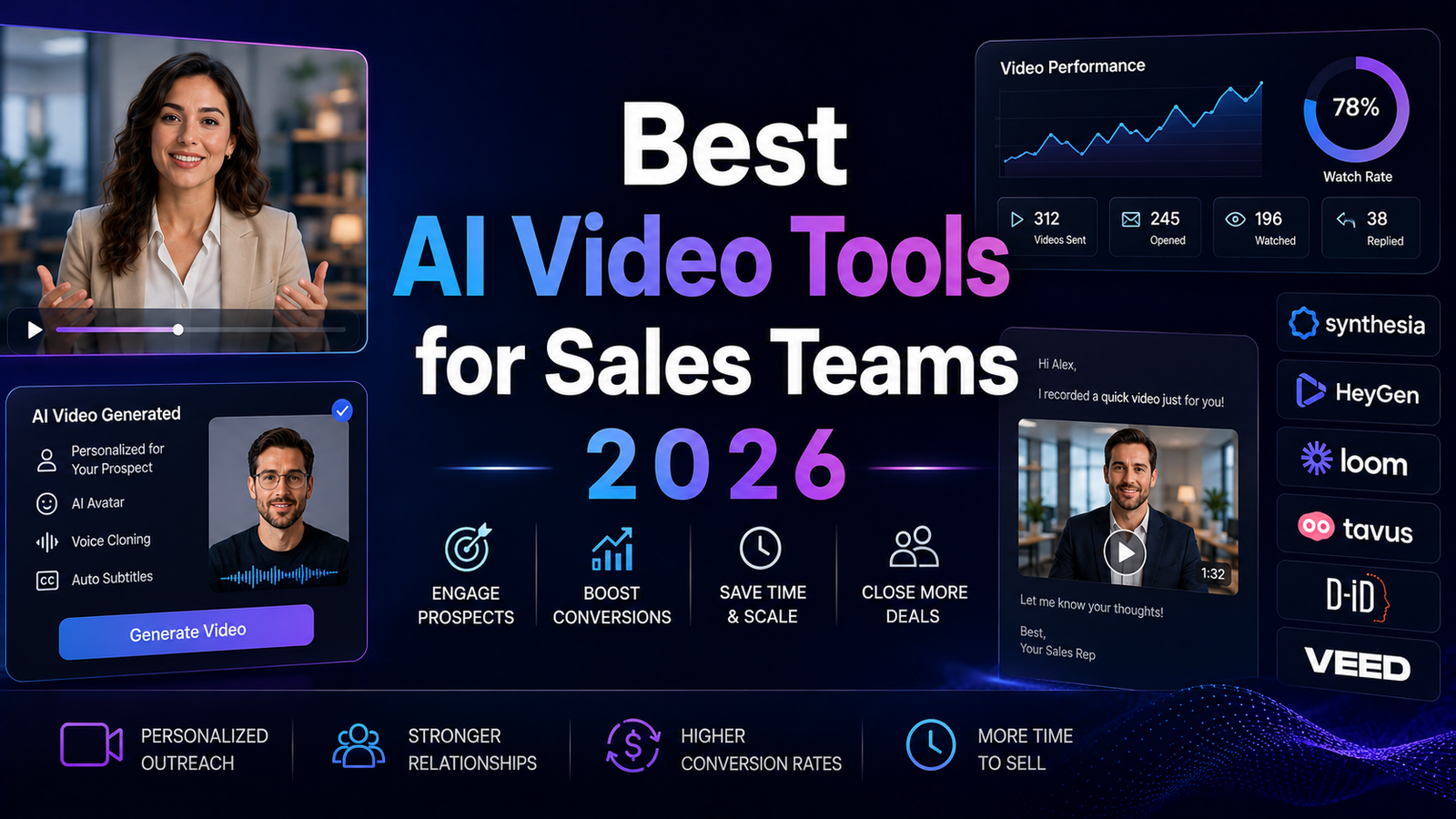
Best AI Video Tools for Sales Teams 2026: Close More With Personalized Video
Sales outreach changed shape in 2026, and video is the reason. The plain text cold email still exists, but reply rates have kept sliding, and the teams pulling ahead are the ones putting a face and a personalized message in front of prospects at a scale that used to be impossible. AI video is what made that scale possible. A rep can now record one video and have it personalized for hundreds of prospects, spin up an avatar demo without a camera, or fire off a quick screen-and-face follow-up in the time it takes to write a paragraph.
The result is a crowded category with tools that look similar on the surface but solve very different parts of the sales motion. Some generate polished avatar videos with no camera required. Some personalize a single recording across thousands of recipients. Some are built for fast, human, screen-recorded messages. Getting the stack right means matching the tool to the specific job, whether that is cold prospecting, live demos, onboarding a new customer, or following up after a call.
This roundup covers eight tools that address those different needs, with honest notes on where each one fits and where it falls short. The goal is not to crown a single winner, because a prospecting tool and a demo tool are not competing for the same slot. It is to help you build the right combination for how your team actually sells.
Comparison Table
| Tool | Best For | Starting Price | Free Plan |
|---|---|---|---|
| HeyGen | Personalized sales videos, voice cloning | ~$29/mo | Yes, limited |
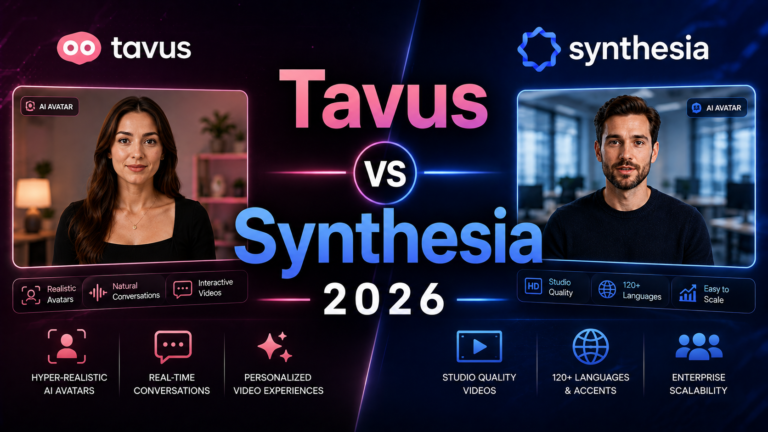
| Synthesia | Polished demos and onboarding video | ~$18-29/mo | Yes, limited |
| Tavus | 1:1 personalized video at scale via API | ~$59/mo | Yes, limited |
| D-ID | Cheap talking-head follow-ups | ~$5.90/mo | Trial |
| Vidyard | Video messaging and hosting for sales | Free tier, paid from ~$19/mo | Yes |
| Loom | Quick screen-and-face messages | Free tier, paid from ~$15/mo | Yes |
| Sendspark | Personalized video for cold outreach | ~$15/mo | Trial |
| ElevenLabs | AI voice for narration and dubbing | Free tier, paid from ~$5/mo | Yes |
Pricing is subject to change. Always verify current pricing on the tool’s official website before purchasing.
HeyGen
HeyGen has become the default AI avatar tool for sales teams that want polished, natural-looking video without ever turning on a camera. For sales specifically, its standout use is personalized video: you can create a template with an avatar and swap in each prospect’s name, company, and details, producing outreach that feels one-to-one at scale.
Key features include highly expressive pre-built avatars, custom avatar creation from your own footage, voice cloning so a rep’s own voice can narrate scaled videos, 175+ languages with translation, and a straightforward editor that non-technical reps can use.
Pros: the avatar realism is among the best in the category, voice cloning makes scaled personalization feel authentic, and the tool is genuinely easy to use. Cons: premium plans and per-seat fees add up for larger teams, and the free tier is restrictive.
Pricing starts around $29 per month for the Creator plan, with Business tiers running higher plus per-seat costs.
Best for: sales teams that want realistic, personalized avatar videos for prospecting and follow-up without production overhead.
Synthesia
Synthesia is the polished, no-code studio that sales and revenue teams reach for when they need consistent, professional video for demos, onboarding, and enablement. Where HeyGen leans toward creator and marketing use, Synthesia’s strength is reliable, on-brand video produced repeatedly by non-technical teams.
Key features include 230+ avatars, 140+ languages with strong localization, a slide-style editor, brand templates, and enterprise-grade security and consistency that larger sales orgs need.
Pros: extremely accessible for non-technical reps, excellent localization for global sales teams, and highly consistent output that stays on-brand across many videos. Cons: less suited to true one-to-one mass personalization than Tavus, and per-seat pricing scales up for big teams.
Pricing starts in the roughly $18 to $29 per month range for accessible plans and scales to enterprise tiers.
Best for: sales teams producing demo, onboarding, and enablement video at scale that has to look consistent and professional.
Tavus
Tavus is the developer-focused option built for one-to-one personalized video at genuine scale. A rep records a single video, and Tavus generates hundreds or thousands of unique versions through its API, each appearing to address a specific prospect directly. It also powers real-time conversational avatars for interactive experiences.
Key features include API-driven mass personalization, digital replica creation from one recording, real-time conversational video, and webhook support for automated, CRM-triggered outreach.
Pros: nothing else matches its ability to generate truly individualized video at volume, and its real-time avatars are unique. Cons: it is a developer platform requiring engineering resources and a multi-week integration, voice quality can sound slightly robotic, and pricing scales into enterprise territory with usage-based components.
Pricing starts around $59 per month and scales up through Growth and Enterprise tiers.
Best for: teams with developer resources building personalized or conversational video directly into their sales workflow or product.
D-ID
D-ID is the budget-friendly talking-head option, best known for animating a single photo into a speaking avatar. For sales, its appeal is cheap, simple follow-up videos and API-driven personalization for teams watching costs.
Key features include photo-to-video avatars, 120+ languages, a mature developer API, and real-time conversational agents on higher tiers.
Pros: the lowest entry price in the avatar category, strong photo animation, and a stable API. Cons: avatar realism sits a visible step below HeyGen and Synthesia, lower tiers carry watermarks and low resolution, and it is best for simple talking-head content rather than polished outreach.
Pricing starts around $5.90 per month for the Lite plan, with Pro around $29 per month (or roughly $16 annually) for watermark-free commercial use.
Best for: budget-conscious teams and developers needing cheap, simple talking-head follow-ups.
Vidyard
Vidyard is built specifically for sales video messaging and hosting rather than AI avatar generation. Reps record quick webcam or screen videos, send them through email or LinkedIn, and get notified when prospects watch, with analytics that tie viewing back to the pipeline.
Key features include one-click video recording, video hosting with viewer analytics, CRM integrations with Salesforce and HubSpot, and AI features for scripting and editing.
Pros: purpose-built for sales workflows, strong analytics and CRM integration, and a genuinely useful free tier. Cons: it is a recording and hosting tool, not an avatar generator, so it does not create synthetic presenters.
Pricing offers a free tier, with paid plans from around $19 per month.
Best for: reps who want to send authentic, self-recorded videos with tracking and CRM integration.
Loom
Loom is the fast, human option for screen-and-face messages. It is not an AI avatar tool, but it earns its place because so much of sales video is simply a quick, personal walkthrough: a screen recording of a proposal, a short face-to-camera follow-up, or a demo clip sent minutes after a call.
Key features include instant screen and webcam recording, AI-generated titles and summaries, filler-word removal, and easy sharing with view tracking.
Pros: extremely fast and low-friction, widely recognized by recipients, and strong for authentic personal touch. Cons: no synthetic avatars or mass personalization, so it does not scale to hundreds of individualized videos.
Pricing includes a free tier, with paid plans from around $15 per month.
Best for: reps who want quick, genuine screen-and-face messages without any production effort.
Sendspark
Sendspark focuses on personalized video for cold outreach, blending recorded video with dynamic personalization. It can insert a prospect’s name, company, or website into a video at scale, and pairs recorded intros with automated backgrounds to make bulk outreach feel individual.
Key features include dynamic video personalization, AI avatars and voice options, animated custom backgrounds showing a prospect’s website, and integrations with outreach and CRM tools.
Pros: purpose-built for scaled cold outreach, strong personalization tokens, and outreach-tool integrations. Cons: a narrower feature set than the full avatar studios, and best results still require thoughtful setup.
Pricing starts around $15 per month.
Best for: outbound teams running personalized video specifically for cold prospecting at volume.
ElevenLabs
ElevenLabs is not a video tool, but it is the voice layer that makes many sales videos sound professional. For teams producing avatar videos or narrated demos, ElevenLabs provides natural, expressive AI voices and voice cloning that outclass the built-in text-to-speech in most video tools.
Key features include highly realistic AI voices, voice cloning, 30+ languages, and an API for integrating voice into automated video pipelines.
Pros: the most natural AI voice quality available, strong voice cloning, and affordable entry pricing. Cons: it only handles audio, so it is a complement to a video tool rather than a standalone solution.
Pricing includes a free tier, with paid plans from around $5 per month.
Best for: teams that want their avatar and demo videos to sound genuinely human rather than robotic.
Frequently Asked Questions
Do personalized sales videos actually improve reply rates?
In practice, yes, when done well. Video outreach consistently outperforms plain text on reply and engagement rates because it adds a human face and a personal touch that text cannot. The key is genuine personalization rather than an obvious mass blast. Tools that insert real prospect details, or that let a rep record a quick authentic message, tend to see the strongest lift. The gain comes from standing out in a crowded inbox, not from the novelty of video itself.
Should a sales team use an AI avatar tool or a screen-recording tool?
Most teams end up using both. Avatar tools like HeyGen and Synthesia are best for scaled, polished, or personalized video where you do not want to record every clip yourself. Screen-recording tools like Loom and Vidyard are best for fast, authentic, one-off messages tied to a specific deal. The two serve different moments in the sales cycle, so the right answer is usually a combination rather than one or the other.
What is the cheapest way to start with sales video?
Loom and Vidyard both have genuinely usable free tiers for self-recorded video, which is the lowest-cost entry point. For AI avatar video, D-ID’s Lite plan around $5.90 per month is the cheapest on-ramp, and ElevenLabs offers a free voice tier. A team can test the whole approach for very little before committing to a higher-end avatar platform once the results justify it.
Final Recommendation
The right sales video stack depends on how your team sells, but for most teams two tools anchor it. HeyGen is the top pick for personalized, realistic avatar video, with voice cloning that makes scaled outreach feel authentically like a rep. Synthesia is the top pick for polished, consistent demo, onboarding, and enablement video that non-technical teams can produce repeatedly. Between them, they cover the majority of what a sales team needs from AI video.
Around that core, add the specialists that fit your motion. Tavus if you have developers and need true one-to-one video at massive scale. D-ID for cheap, simple talking-head follow-ups. Vidyard or Loom for fast, authentic self-recorded messages with tracking. Sendspark for personalized cold outreach at volume. And ElevenLabs as the voice layer that makes any of your avatar or narrated videos sound genuinely human rather than robotic.
Start with one avatar tool and one recording tool, prove the reply-rate lift on real outreach, and expand the stack only once the results justify it. The teams closing more in 2026 are not the ones using every tool here. They are the ones that matched the right two or three to how they actually sell, and put a personalized face in front of prospects at a scale their competitors cannot match.
Pricing is subject to change. Always verify current pricing on the tool’s official website before purchasing.
Disclosure: This article contains affiliate links.