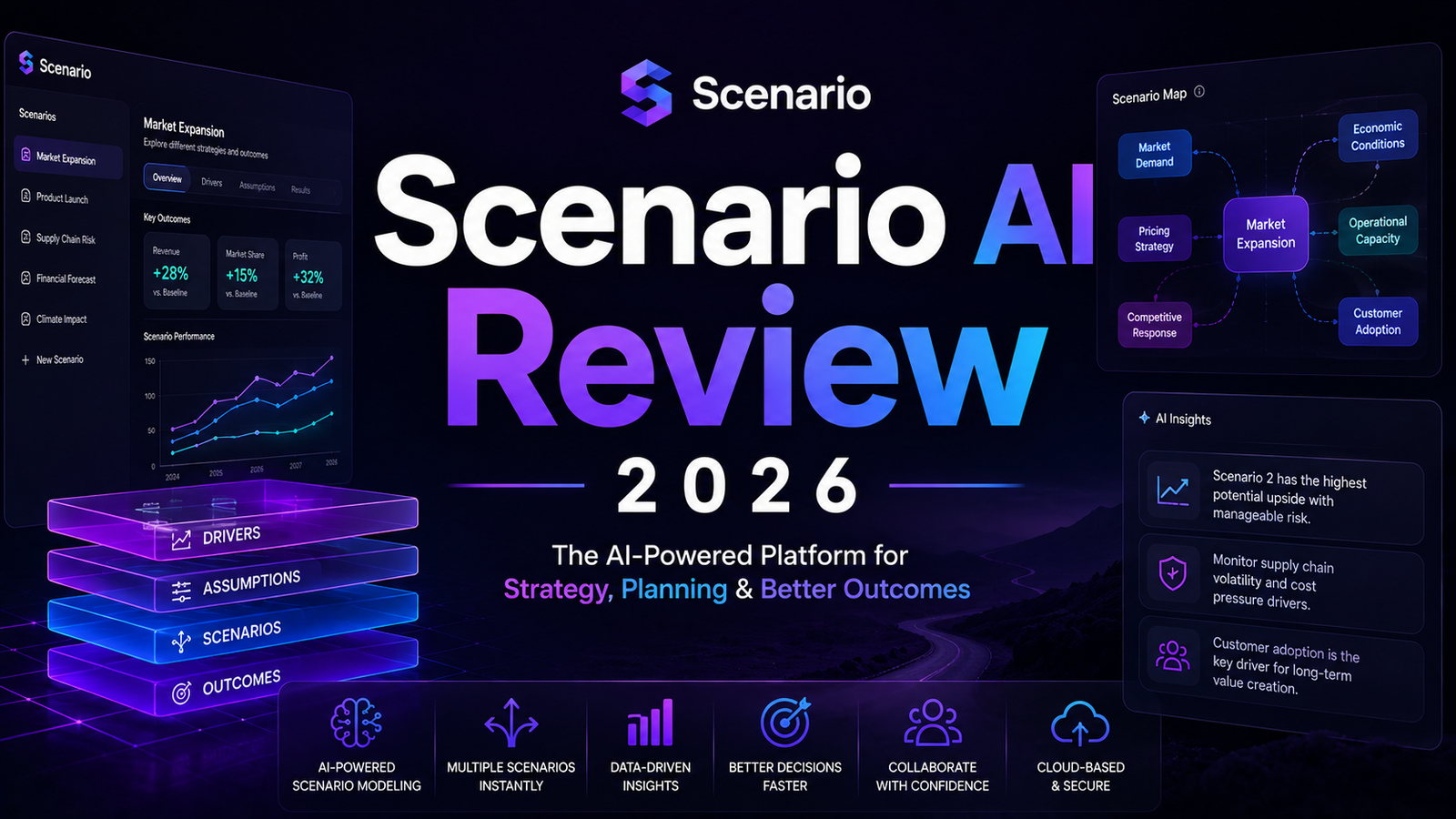
Scenario AI Review 2026: Custom-Trained Game Art That Stays On Style?
The problem AI image generation creates for game studios is style inconsistency. A character generated in session one, a building generated in session two, and an item icon generated in session three can look like they came from three different games. Generic AI models apply generic aesthetics. For a production game where visual coherence is part of the product, that inconsistency is not a cosmetic issue. It is a production problem.
Scenario AI was built to solve that specific problem. The core mechanism is custom LoRA model training on a studio’s own reference art. Upload 15 to 50 images representing the game’s established visual style, tag them properly, and Scenario trains a generative model that has learned the franchise’s visual language. Every subsequent generation applies that trained model, producing new characters, environments, props, and UI assets that look like they belong in the same game as the reference art that was used to train it.
That capability is why Scenario is trusted by game studios and creative teams at production scale. It is also why it is the wrong tool for solo developers who need a quick prop and do not want to invest in reference art curation and model training before they can generate their first asset. Scenario rewards teams that front-load the training investment. It frustrates users who need results in the first five minutes.
Plan Comparison Table
| Plan | Best For | Starting Price | Free Plan |
|---|---|---|---|
| Free | Testing the platform with limited daily credits and basic training access | $0 (50 credits/day, 2 trainings/month) | Yes |
| Basic | Individual developers who need regular generation with custom model access | $15/month (1,500 credits) | No |
| Essential | Small teams needing more trainings and generation volume | $90/month (20 trainings, 2,000 images/month) | No |
| Pro | Mid-sized studios needing high-volume training and generation throughput | $750/month (50 trainings, 12,000 images/month) | No |
| Premium / Enterprise | Larger studios needing maximum throughput, custom SLAs, and dedicated support | From $4,500/month / custom | No |
“Pricing is subject to change. Credit costs vary by generation type; premium models, video, 3D, and custom model training consume credits faster than standard image generation. Unused monthly credits do not roll over. Free plan includes 50 daily credits and 2 model trainings per month with no credit card required. Always verify current pricing and credit consumption rates at scenario.com before purchasing.”
What Scenario AI Is
Scenario is an AI asset generation platform built for game studios, marketing teams, and creative teams that need production-ready visual content at scale while maintaining strict style consistency. The platform has grown to serve thousands of creative teams and supports over 500 AI models for image, video, 3D, and audio generation, alongside its core custom model training capability.
The platform is accessible through a web interface and through an API-first architecture with a native Unity plugin. The Unity plugin enables in-engine asset generation and import without leaving the development environment. The API supports automated pipeline integration for studios generating assets programmatically rather than through individual web interface sessions.
SOC 2 Type II certification covers the security posture for enterprise teams handling proprietary art assets and IP. This is a relevant distinction for studios whose reference art represents valuable intellectual property that cannot be exposed to external model training without security assurances.
The model training workflow accepts image uploads, text captions for training data description, and LoRA blend options for combining the characteristics of multiple trained models. Captioning guides what the model learns about each reference image. Tag quality and reference image selection are the most significant variables in trained model output quality, which means the investment in curating clean, representative reference images pays compounding dividends across subsequent generations.
Key Features
Custom LoRA model training on proprietary art. This is the feature that positions Scenario differently from general AI image tools. Trained models capture the specific combination of color palette, line weight, character proportions, shading style, and compositional preferences that define a franchise’s visual identity. Once a model is trained on the studio’s reference art, every generation through that model produces outputs that look like they belong in the franchise rather than like generic AI output.
The training process requires no technical ML experience. Upload reference images through the web interface, add captions describing each image’s content, and Scenario handles the training computation. The free plan includes 2 model trainings per month, which is sufficient for initial experimentation with reference sets. Serious production use requires paid plan training allocations that scale with the volume of model iterations the team needs.
Style-consistent generation across asset categories. Once a custom model is trained, it applies the learned visual style to text prompts describing different asset types. A character model trained on fantasy RPG reference art generates consistent-looking warriors, mages, and NPCs from new prompts without regenerating the style each time. The same trained model can generate character sprites, environment backgrounds, item icons, and UI elements that all share the same visual language. This cross-category consistency is the production multiplier that justifies the training investment for studios with established visual directions.
Inpainting and pixel-perfect editing. The inpainting tool allows editing specific regions of a generated image while preserving the surrounding context and style. For iterative asset refinement where a character’s face needs adjustment without regenerating the entire figure, or where a specific prop detail needs modification without losing the surrounding environment, pixel-perfect inpainting provides surgical editing capability within the generation environment.
Texture baking and PBR workflows. Scenario supports texture generation and PBR material baking for teams that need surface materials alongside 2D character and environment art. Tileable texture generation produces seamlessly tiling materials for environment surfaces. For game projects that mix 2D art with 3D environments, the texture pipeline bridges Scenario’s 2D strength with the material requirements of 3D engines.
Upscaling and reskinning. AI upscaling increases generated asset resolution for assets that need to meet higher-resolution delivery requirements. The reskinning tool applies a different visual style to an existing asset while preserving its structure and composition, enabling variant generation for different game modes, seasonal themes, or franchise-wide visual direction shifts.
API-first architecture with Unity plugin. The API enables programmatic asset generation integrated into studio pipelines, build systems, and automated workflows. The Unity plugin surfaces Scenario’s generation directly inside the Unity editor. For studios running large-scale asset production where individual web interface sessions are operationally inefficient, the API and plugin reduce the generation-to-engine workflow to minimal manual steps.
Pros and Cons
Pros:
- Custom LoRA training on studio art is the most effective solution to AI style inconsistency in game production; trained models enforce visual identity more reliably than reference image prompting alone
- Over 500 AI models including both custom trained models and pre-trained general options cover concept exploration before custom training investment is committed
- SOC 2 Type II certification addresses enterprise IP security requirements for studios with valuable proprietary reference art
- API-first architecture and Unity plugin enable pipeline integration at production scale
- Free plan with 50 daily credits and 2 model trainings per month requires no credit card, allowing genuine evaluation of both generation quality and custom training results
- PBR texture baking and tileable texture generation extend the platform beyond character and environment art into 3D-adjacent material workflows
- LoRA blend capability allows combining characteristics of multiple trained models for nuanced style control
Cons:
- Training custom models requires upfront investment: curating 15 to 50 clean, representative reference images and writing accurate captions is work that must be completed before any generation advantage materializes; teams that skip this produce inconsistent outputs that do not demonstrate Scenario’s core capability
- Credit costs add up on heavy iteration workflows; premium model use, video generation, 3D generation, and custom model training all consume credits faster than standard image generation, and unused credits do not roll over at month end
- Scenario is 2D-focused: 3D asset generation is listed as in development; teams that need properly rigged and animated 3D characters require a dedicated 3D platform alongside Scenario
- The platform is complex for casual users; the range of training options, model selection, generation controls, and API features creates meaningful learning curve for teams that want to start generating immediately without reading documentation
- Higher studio-tier pricing at $750 to $4,500 per month for teams with serious volume requirements moves the platform into dedicated tool budget territory that requires clear ROI justification against freelance artist rates
Pricing Breakdown
Scenario’s pricing is credit-based with model training included at each tier’s defined monthly allocation. The credit system requires understanding credit consumption by generation type before modeling actual monthly costs.
Free: $0. 50 daily credits, 2 model trainings per month, 150 images per month generation limit. No credit card required. The free tier provides enough access to train one or two custom models on reference art and evaluate the consistency quality before any subscription commitment. For evaluating whether Scenario’s custom training produces the style consistency a specific project needs, the free tier is a genuine evaluation tool rather than a locked preview.
Basic: $15/month. 1,500 credits per month, access to custom trained models, commercial license on generated assets. This is the entry point for individual developers who have completed model training and need regular generation volume. The credit count requires tracking consumption by generation type; 1,500 credits support different numbers of generations depending on which models and features are used per session.
Essential: $90/month. 20 model trainings per month, 2,000 images per month, standard support. For small teams actively iterating on custom models as the project art direction evolves, the 20 monthly training slots allow model refinement alongside production generation.
Pro: $750/month. 50 model trainings per month, 12,000 images per month, enhanced support. For mid-sized studios running Scenario as a primary art production tool rather than a supplementary one, this tier’s training and generation volume supports production-scale output.
Premium and Enterprise: From $4,500/month and above with custom pricing. Maximum volume, custom SLAs, dedicated support, and extended team management. For larger studios where Scenario replaces a significant proportion of contract art cost, custom enterprise pricing is negotiated based on team size and volume requirements.
How It Compares to Tripo AI and Meshy AI
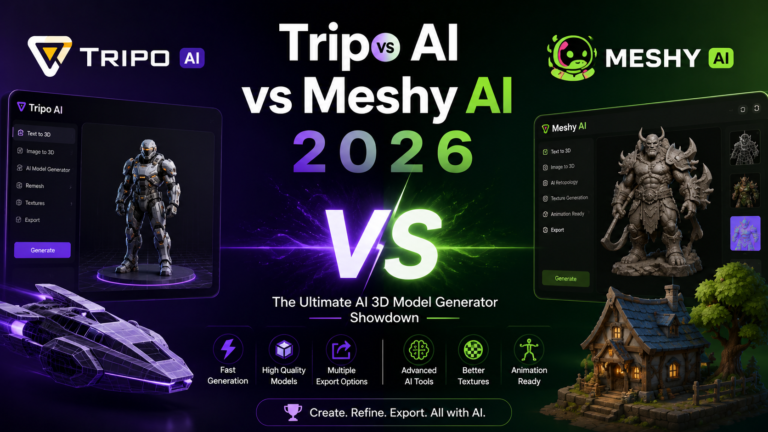
See our full Tripo AI Review 2026 and Meshy AI Review 2026 for complete breakdowns of Tripo AI and Meshy AI.
The comparison between Scenario and Tripo AI or Meshy AI is a complementary relationship rather than a competitive one for most game studios. These tools address different dimensions of the game art pipeline.
Scenario covers the 2D art pipeline: characters, environments, concept art, UI elements, item icons, marketing art, and textures. It solves the style consistency problem through custom model training and covers the 2D production volume requirement for teams that need dozens or hundreds of assets from an established visual direction.
Tripo AI and Meshy AI cover the 3D pipeline: generating, texturing, rigging, and animating 3D assets for game engines. Tripo’s Smart Mesh P1.0 produces structured quad topology in approximately 10 seconds with 300 free monthly credits and direct engine integration. Meshy AI provides the complete 3D pipeline including auto-rigging and 500-plus animation presets at $20 per month.
Neither Tripo nor Meshy trains custom 2D art style models. Scenario does not produce properly rigged and animated 3D characters. The combination of Scenario for 2D art and Tripo or Meshy for 3D assets covers the full game art pipeline more completely than any single platform covers alone.
The practical studio stack that independent analysis describes most frequently: Scenario for establishing and maintaining visual identity across 2D assets, Meshy AI for 3D character and prop generation with animation, and the two platforms paired for a comprehensive game art production workflow. The combined cost at accessible tiers runs $35 to $110 per month for the Scenario Basic plus Meshy Pro combination, covering both the 2D consistency requirement and the 3D animation pipeline.
Frequently Asked Questions
How much reference art does Scenario actually need to train a useful custom model, and what makes training data good?
The documented minimum is 15 images and the recommended range is 15 to 50 images for most use cases. More images covering a broader range of the style’s characteristics produce more generalizable models, but the quality and representativeness of the reference images matter more than quantity. Good training data for a custom model has consistent art style applied across all images, clear depictions of the visual elements that define the style (character proportions, shading technique, color palette, line weight), diverse subject matter within the style (not 50 images of the same character from the same angle), and accurate text captions describing each image’s content. Poor training data has inconsistent style across images, low-resolution or compressed images that lose texture detail, redundant images that overrepresent one element of the style, and missing or inaccurate captions. Teams that curate 20 high-quality representative images with careful captions consistently report better results than teams that upload 50 loosely selected screenshots without captions.
What is the real credit consumption rate, and how much does a typical generation session actually cost?
Credit consumption varies significantly by generation type, and the difference between standard and premium generation is large enough to affect monthly budget planning substantially. Standard image generation from a text prompt consumes credits at a baseline rate that produces a comfortable number of generations from the 1,500 monthly Basic plan credits. Premium model use, ControlNet-guided generation, IP adapter workflows, video generation, 3D asset generation, and custom model training all consume credits at higher rates that can be three to ten times the baseline per generation depending on the specific feature used. The practical operational pattern that avoids credit surprises: identify the specific generation types the team will use most frequently, check the current credit consumption rate for each type in Scenario’s documentation, and model the expected monthly generation volume against those rates before selecting a plan tier. Running a week of typical production sessions on the free tier’s daily credits provides the most accurate consumption estimate for a specific team’s workflow.
Can Scenario be used for non-game projects like marketing art, product visualization, and branded content?
Yes. Scenario’s custom model training capability applies to any production context where style consistency across many generated assets matters, not exclusively to game development. Marketing teams use it to generate on-brand advertising imagery where every generated variant reflects the brand’s visual identity rather than generic AI aesthetics. Product visualization teams train models on product photography style to generate consistent lifestyle scenes. Publishers and media companies train models on established IP art to generate franchise-consistent promotional material. The game development framing in Scenario’s positioning reflects its primary customer base, but the underlying capability is brand and style consistency in AI generation, which applies broadly to any commercial creative context. SOC 2 Type II certification and the API-first architecture support enterprise marketing and product use cases alongside game studio workflows.
Final Verdict
Scenario AI in 2026 is the most effective solution to the style consistency problem that generic AI art generators create for game studios and creative teams with established visual identities. The custom LoRA training capability, when properly set up with quality reference art and captions, produces generation quality that looks like it belongs in the same franchise rather than like generic AI output. For studios that have completed the training investment, the production multiplier across characters, environments, UI, and textures from a single trained model is the clearest ROI in the AI game art category.
The investment required before that ROI materializes is the honest qualifier that belongs alongside the recommendation: curating reference images, writing accurate captions, and iterating on model training is upfront work that teams must complete before the consistency advantage appears. Teams looking for immediate results without a training phase are better served by general AI art tools at lower price points.
The 2D focus means Scenario pairs with rather than replaces dedicated 3D tools. For the complete game art pipeline, Tripo AI and Meshy AI cover the 3D character and asset generation that Scenario’s 2D pipeline does not address. See our Tripo AI Review 2026 and Meshy AI Review 2026 for those recommendations.
The free tier with 50 daily credits and 2 model trainings per month provides enough access to train a custom model on a sample reference set and evaluate whether the output quality justifies a subscription commitment. That evaluation, done with the team’s actual art as reference rather than generic test images, is the most informative path to a subscription decision.
Rating: 4.3 / 5 — Best custom-trained AI game art platform for studios with established visual identities. Requires upfront training investment before the style consistency advantage materializes.
Disclosure: This article contains affiliate links.