Tavus vs Synthesia 2026: Personalized Video vs Enterprise Avatars
Comparing Tavus and Synthesia is a little like comparing a developer toolkit to a video studio. Both generate AI avatar video, and both get lumped into the same category, but they are built for genuinely different jobs. Choosing the wrong one is one of the more expensive mistakes a team can make in this space, because you can spend weeks and real budget setting up a platform only to discover it was never designed for what you actually need.
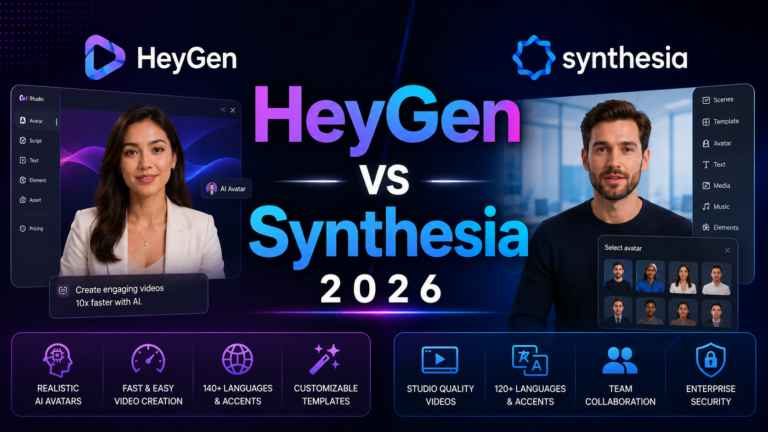
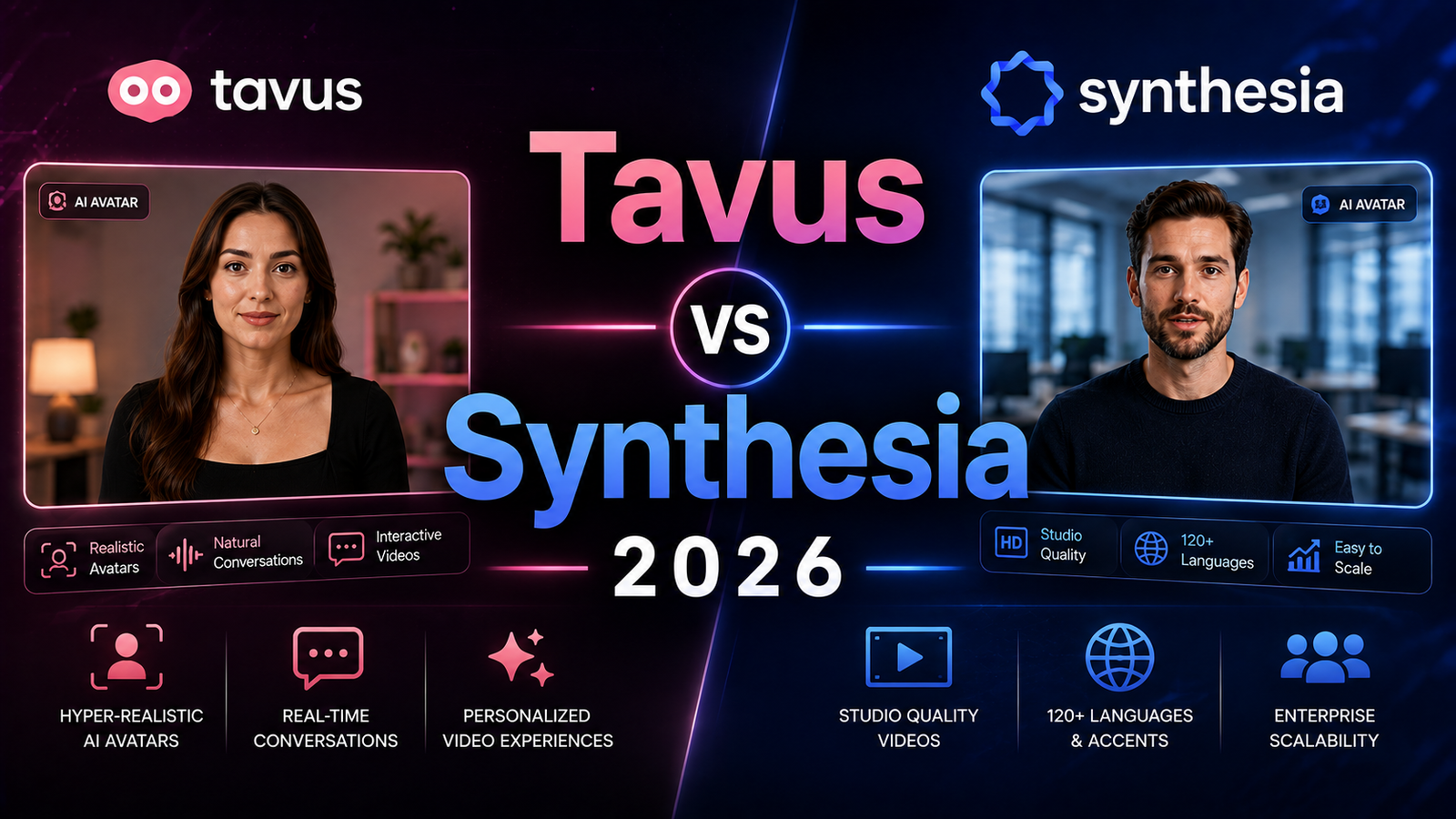
Here is the distinction in one breath. Tavus is a developer platform for building personalized video at scale and real-time conversational avatars into your own product. Synthesia is a no-code studio for teams that need to make polished training, onboarding, and communications videos without touching an API. If you know which of those sentences describes you, you already know which tool wins. This comparison exists for everyone who is not yet sure, and for teams weighing whether the extra capability of one justifies the extra complexity.
The short version: most teams making standard avatar videos should use Synthesia. Developers building personalized or conversational video as a feature of their own application should use Tavus. The rest of this piece explains why, and where the edges blur.
Comparison Table
| Feature | Tavus | Synthesia |
|---|---|---|
| Core use case | Personalized video at scale, real-time conversational AI | Polished training, onboarding, and comms video |
| Ease of use | Developer and API focused | No-code, web-based editor |
| Personalization | Generate thousands of unique videos via API | Manual editing per video |
| Languages | Broad, voice and language support | 140+ languages, enterprise localization |
| Real-time avatars | Yes, sub-second conversational avatars | No, pre-rendered video only |
| Free tier | Yes, limited minutes | Yes, limited on entry plans |
| Starting price | ~$59/mo, scales to enterprise | ~$18-29/mo, scales to enterprise |
Pricing is subject to change. Always verify current pricing on the tool’s official website before purchasing.
Intended Use Case: Who Each Is For
The single most important thing to understand about Tavus is that it does two things, and both are developer-facing. The first is personalized video at scale. A sales rep records one outreach video, and Tavus generates hundreds or thousands of unique versions through its API, each appearing to address a specific recipient by name and detail. The second is real-time conversational avatars through its Conversational Video Interface, where a digital human sees, hears, and responds to a website visitor in under a second. Neither of these is a “make a video and download it” workflow. They are building blocks for applications where personalized or conversational video is the product.
Synthesia is the opposite by design. It is a no-code studio built for teams that need to produce professional avatar videos quickly and repeatedly without engineering help. You pick an avatar, type or paste a script, choose a language, and the platform renders a polished presenter video. It is used heavily for employee training, onboarding, internal communications, product explainers, and localized content at scale. Synthesia serves a large share of major enterprises precisely because it turns video production into something a learning-and-development or marketing team can do on their own.
So the audience split is clean. Tavus is for developers, product teams, and go-to-market ops running programmatic video. Synthesia is for L&D teams, marketers, comms teams, and anyone who needs finished videos without code.
Ease of Use: No-Code Studio vs Developer Platform
This is where the two diverge most sharply, and where teams most often pick wrong.
Synthesia is genuinely no-code. Its web-based editor is closer to building a slide deck than programming. You work scene by scene, drop in avatars and text, and preview as you go. A non-technical person can produce a professional training video on their first afternoon. That accessibility is the entire point of the product, and it is why Synthesia has become a default for teams that want video capability without hiring or contracting technical help.
Tavus is a developer platform. Getting value out of it means working with an API, handling webhooks, and integrating video generation into your own systems. There is real setup involved, and production deployments typically require a development sprint measured in weeks, not an afternoon. For a developer, this is exactly what they want, because the API is what makes personalization at scale and real-time avatars possible. For a non-technical team, it is a wall. The public documentation, while improving, can leave developers hitting under-documented edge cases on more novel builds.
The practical rule: if no one on your team writes code, Synthesia is the only one of these two you can realistically use. If you have developers and the avatar experience needs to live inside your own app, Tavus is built for you and Synthesia cannot do what you need.
Personalization at Scale: Tavus’s Real Strength
If there is one capability that justifies Tavus’s existence next to Synthesia, it is personalization at scale, and it is worth being precise about what that means.
With Synthesia, every video is essentially made one at a time. You can localize a video into many languages and reuse templates, but generating a genuinely unique video for each of a thousand individual recipients, each addressed personally, is not the workflow the platform is built around. It is a studio for producing polished videos, not a pipeline for mass-generating individualized ones.
With Tavus, that mass personalization is the core feature. Push a recording and a dataset of names, companies, and details to the API, and Tavus returns a unique video for every row, each one appearing to speak directly to that person. This is what powers personalized sales outreach, dynamic onboarding sequences, and CRM-triggered video where every new lead or customer automatically receives a tailored clip. It is a fundamentally different capability, and for teams whose entire strategy depends on individualized video at volume, nothing in Synthesia’s toolkit replaces it.
The same logic extends to real-time conversational avatars, which Synthesia does not offer at all. If your use case is an interactive digital human on a website or in an app, Tavus is not just the better choice, it is the only choice between these two.
Video Quality and Avatar Realism
Both platforms produce strong avatar output, and neither embarrasses itself on quality. The differences are more about consistency and use-case fit than a stark realism gap.
Synthesia’s avatars are polished, professional, and highly consistent, which is exactly what enterprise training and comms need. When you are producing dozens of videos that all have to look on-brand and reliable, Synthesia’s predictability is a feature. Its localization pipeline also keeps lip-sync and delivery clean across many languages, which matters for global training rollouts.
Tavus’s avatar quality is capable, and its digital replicas can be convincing, though independent reviewers have noted that the voice side is where the uncanny valley is most likely to appear, with cloned voices sometimes sounding a touch robotic relative to the visual rendering. Because Tavus is often deployed programmatically at scale or in real-time conversation, the bar it has to clear is different from a hand-crafted training video. For personalized outreach and live avatars, its quality is generally good enough to be effective, but a marketing team hand-producing a flagship brand video will usually find Synthesia’s polish easier to control.
The honest summary: Synthesia edges ahead on consistent, controllable polish for produced video. Tavus is competitive and improving, and its quality is well-suited to the personalized and real-time contexts it is built for.
Pricing and Total Cost
On paper, Synthesia’s entry pricing is lower and simpler, starting in the roughly $18 to $29 per month range for its accessible plans and scaling to enterprise tiers for larger teams and heavier localization needs. For a team producing a steady stream of training or marketing videos, the cost is predictable and maps cleanly to seats and usage.
Tavus starts higher, around $59 per month at the entry level, and scales into Growth and Enterprise tiers that reach into the hundreds of dollars per month, with usage-based components for conversational video that can add up. Its overage billing on real-time video runs on a per-minute basis, which means an unexpected traffic spike on a deployed conversational avatar can produce meaningful additional charges. This is the tradeoff for a platform built to power applications rather than produce standalone videos.
The total-cost question really comes back to fit. For a team making standard videos, Synthesia is both cheaper and more predictable. For a developer building personalized video at scale, Tavus’s higher and more variable cost buys a capability Synthesia simply does not have, so the comparison is not really apples to apples. You are paying Tavus for programmatic power, and Synthesia for accessible production.
Frequently Asked Questions
Can Synthesia do personalized video at scale like Tavus?
Not in the same way. Synthesia can localize videos into many languages and reuse templates, but generating a genuinely unique, individually addressed video for each of thousands of recipients through an API is Tavus’s core function, not Synthesia’s. If mass personalization or CRM-triggered video is central to your strategy, Tavus is built for it and Synthesia is not the right tool.
Do I need to be a developer to use Tavus?
Effectively, yes. Tavus is an API-first developer platform, and getting real value from it means integrating it into your own systems, which requires engineering resources and typically a multi-week setup for production use. If your team has no developers, Synthesia’s no-code studio is the realistic choice, since you can produce professional videos without writing any code.
Which one is better for employee training videos?
Synthesia, clearly. Training and internal communications video is exactly what Synthesia is built for, with a no-code editor, consistent professional avatars, strong localization across 140+ languages, and the reliability large organizations need. Tavus can generate video, but its strengths in personalization and real-time conversation are not what a training-video workflow calls for.
Final Verdict
Tavus and Synthesia are not really competitors so much as tools for two different jobs that happen to share a category label. Getting the choice right comes down to one honest question: are you making videos, or are you building a product?
For most teams, the answer is making videos, and the winner is Synthesia. It is the no-code studio for polished training, onboarding, marketing, and communications video, accessible to non-technical teams, strong on localization, and predictable on price. If your goal is professional avatar videos produced quickly and repeatedly without engineering help, Synthesia is the clear pick and the one most organizations should choose.
For developers and product teams building personalized video at scale or real-time conversational avatars into their own application, Tavus is the answer, and Synthesia cannot do what it does. Its API-driven mass personalization and sub-second conversational avatars are genuinely distinctive, and for the teams whose strategy depends on them, the higher cost and developer overhead are the price of a capability nothing else on this comparison offers.
Pick Synthesia if you want to make videos. Pick Tavus if you want to build with video. Choose based on which of those is actually your job, and you will not waste budget on a platform that was never designed for what you need.
Pricing is subject to change. Always verify current pricing on the tool’s official website before purchasing.
Disclosure: This article contains affiliate links.