Claude Mythos 2026: Anthropic’s Most Powerful AI Model. What It Is and Who Gets Access?
On April 7, 2026, Anthropic did something no major AI lab had done before: announced a frontier model and simultaneously declared it would not be made publicly available. The model is Claude Mythos Preview. The reason for the restricted access is not commercial. It is because Mythos can autonomously find and exploit software vulnerabilities at a level that, if released without constraint, would give bad actors a weapon that the world’s security infrastructure is not yet prepared to defend against.
This is a departure from the trajectory of Claude AI releases to date. Haiku, Sonnet, and Opus have all followed a structured progression from announcement to public access. Mythos sits above all of them in a new capability tier, and Anthropic’s answer to that capability is Project Glasswing: a controlled deployment to defensive security teams rather than a public release.
What follows is everything publicly known about Mythos, Glasswing, the benchmark scores, the pricing structure, and what a public version might look like.
What Claude Mythos Is and How It Differs From Opus and Sonnet
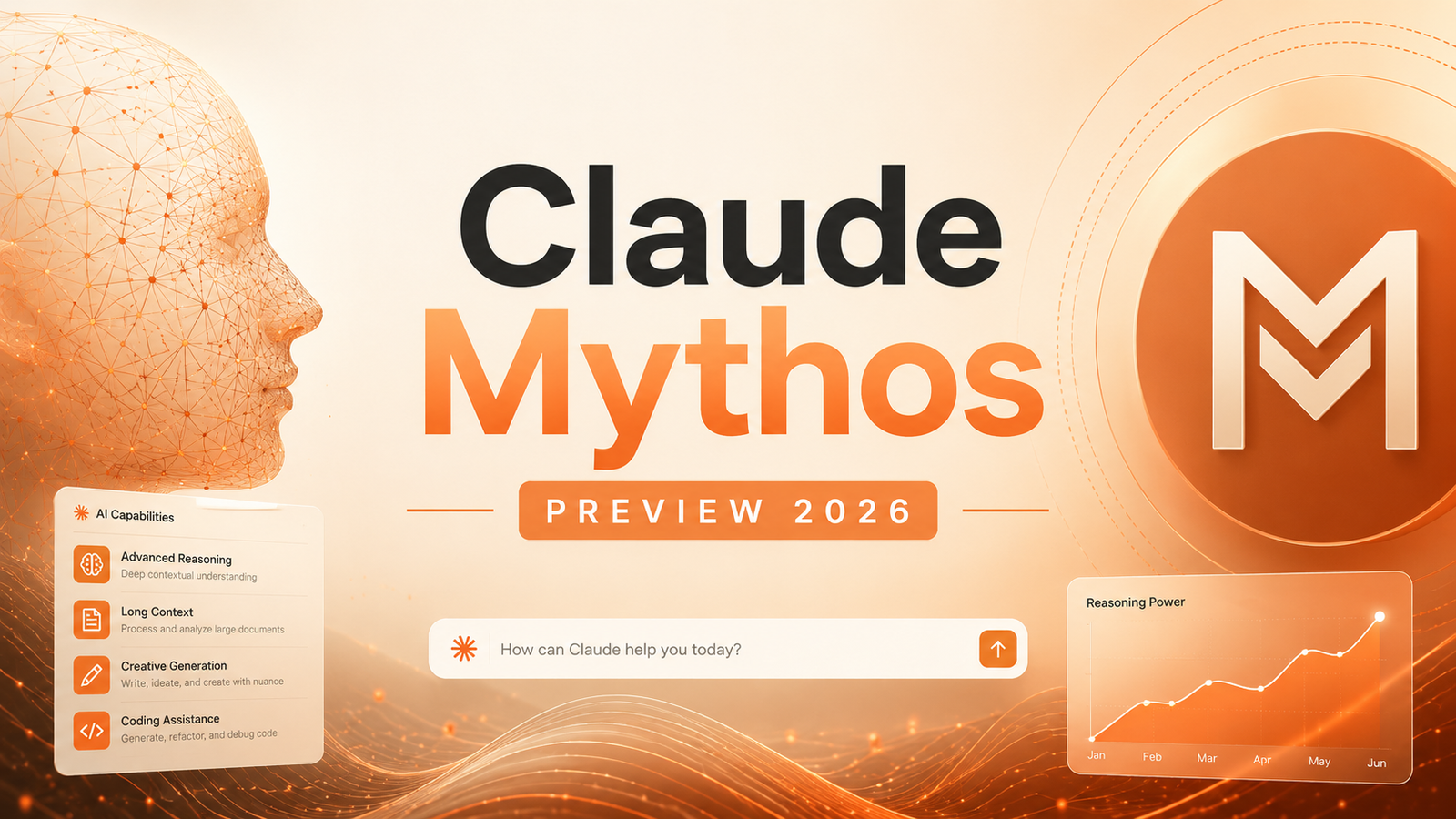
Claude Mythos Preview is a general-purpose frontier model that sits a full capability tier above Opus 4.7. The internal codename was “Capybara.” The name Mythos comes from the Ancient Greek for “utterance” or “narrative.” It is larger and more capable than any previous Claude model across general reasoning, coding, mathematics, and cybersecurity.
The model is not a narrow specialist. It performs at or near the top of every major benchmark across domains, including mathematics, graduate-level science, long-context reasoning, and software engineering. The cybersecurity capability is what triggered the restricted deployment decision: Mythos has autonomously discovered thousands of zero-day vulnerabilities across every major operating system and web browser, including bugs that had gone undetected for 27 years, and demonstrated the ability to construct working exploits without human guidance.
Anthropic published a 244-page system card for Mythos at launch, the first time the company has released system card documentation for an unreleased model. The document details the model’s capabilities, the ASL-4 (Anthropic Safety Level 4) protocols governing access, and the reasoning behind the restricted deployment decision.
Compared to the Claude family structure familiar to developers and consumers: Haiku handles fast, efficient tasks; Sonnet balances capability and cost; Opus serves as the flagship for complex work; Mythos is now in a separate category that Anthropic has not yet named publicly but that sits above the Opus tier entirely.
Project Glasswing: What It Is and Who Has Access
Project Glasswing is Anthropic’s controlled deployment program for Mythos Preview. The name comes from the glasswing butterfly, whose transparent wings symbolize the initiative’s commitment to transparency and vulnerability disclosure. Announced simultaneously with Mythos on April 7, 2026, Glasswing brings together organizations responsible for the infrastructure billions of people depend on and gives their security teams access to the model before hostile actors can develop similar capabilities.
The founding partner roster includes AWS, Apple, Broadcom, Cisco, CrowdStrike, Google, JPMorganChase, the Linux Foundation, Microsoft, NVIDIA, and Palo Alto Networks. More than 40 additional vetted organizations have been granted access, bringing the total to roughly 50 as of early June 2026.
Access under Glasswing operates through ASL-4 protocols, the highest security tier in Anthropic’s responsible scaling framework. Partners must execute formal agreements, obtain security clearances for personnel who will interact with the model, and submit to ongoing auditing of model usage by Anthropic’s trust and safety team.
Three categories of organizations can apply beyond the original launch partners: applicants approved through the Claude for Open Source program (maintainers of widely used open-source projects), government cybersecurity teams with cleared personnel, and additional critical infrastructure operators. Applications are reviewed at anthropic.com/glasswing.
Anthropic has committed $100 million in model usage credits to cover Project Glasswing partner access throughout the research preview period, alongside $4 million in donations to open-source security organizations.
The cybersecurity results three weeks into the rollout: security teams across Glasswing partners reported thousands of high-severity vulnerabilities surfaced by Mythos across every major operating system and web browser. Some of those vulnerabilities are patches being deployed now, reducing the window during which hostile actors could exploit them.
Key Capabilities: Cybersecurity, Reasoning, and Coding
Cybersecurity. This is the defining capability that triggered the restricted deployment. Mythos has autonomously discovered zero-day vulnerabilities across all major operating systems and browsers, constructed working exploits without human guidance, and demonstrated what Anthropic describes as the ability to “surpass all but the most skilled humans at finding and exploiting software vulnerabilities.” On Cybench, a cybersecurity benchmark, Mythos achieves 100 percent pass@1, fully saturating the benchmark. On CyberGym, a harder benchmark, it scores 83.1 percent versus Opus 4.7’s 66.6 percent.
Reasoning and mathematics. On USAMO 2026 (advanced mathematics competition problems), Mythos scores 97.6 percent, representing a 55-percentage-point improvement over Opus 4.6 on math proofs, the largest single benchmark jump in the Claude model family’s history. On HLE (Humanity’s Last Exam) with tools, Mythos scores 64.7 percent versus Opus 4.7’s 53.1 percent.
Coding. Mythos scores 93.9 percent on SWE-bench Verified, the highest score ever recorded on this benchmark as of the time of writing. On SWE-bench Pro, a harder variant with more complex real-world tasks, Mythos scores 77.8 percent versus Opus 4.7’s 53.4 percent. On Terminal-Bench 2.0, which tests autonomous command-line task completion, Mythos scores 82.0 percent, reaching 92.1 percent with extended timeouts.
Long-context reasoning. On GraphWalks BFS (a long-context reasoning task at 256K to 1M tokens), Mythos’s documented score significantly exceeds competing models, reflecting its ability to maintain coherent reasoning across very large context windows.
Benchmark Scores vs Opus 4.7
| Benchmark | Claude Mythos | Claude Opus 4.7 | GPT-5.5 | DeepSeek V4 Pro |
|---|---|---|---|---|
| SWE-bench Verified | 93.9% | 80.8% | ~82-84% | 80.6% |
| SWE-bench Pro | 77.8% | 53.4% | 57.7% | 54.2% |
| GPQA Diamond | 94.6% | 91.3% | 92.8% | 94.3% |
| HLE (with tools) | 64.7% | 53.1% | 52.1% | 51.4% |
| USAMO 2026 | 97.6% | ~42% | ~73% | ~74% |
| CyberGym | 83.1% | 66.6% | — | — |
| Cybench | 100% (saturated) | — | — | — |
| Terminal-Bench 2.0 | 82.0% | 65.4% | 75.1% | 68.5% |
The USAMO mathematics gap is the most striking single number: a 55-percentage-point improvement over Opus 4.6 on math proofs. The SWE-bench Verified score of 93.9 percent is the highest ever recorded on that benchmark. The Cybench saturation at 100 percent pass@1 is why the model is not public.
Pricing for Glasswing Partners
“Pricing is subject to change. Always verify current pricing on the tool’s official website before purchasing.”
Claude Mythos Preview is priced at $25 per million input tokens and $125 per million output tokens for Project Glasswing partners. This represents a 5x premium over Opus 4.7 pricing, reflecting the model’s capability tier and the restricted deployment structure.
Access is available through four infrastructure channels: the Claude API directly, Amazon Bedrock, Google Cloud’s Vertex AI, and Microsoft Foundry. There is no access through claude.ai or any consumer interface.
The $100 million in usage credits that Anthropic committed to the Glasswing program covers partner access throughout the research preview, meaning most organizations in the program are not paying the listed rate from their own budgets during the initial phase.
There is no consumer pricing, no API access for standard developers, and no Claude.ai subscription that includes Mythos. Access is gated by Glasswing membership, which requires application and vetting.
When Public Access Is Expected
Anthropic has said that public access to Mythos-level capabilities is a question of “when, not if” rather than an indefinite restriction. The framing is explicit: as the defensive security community uses Mythos to patch the vulnerabilities the model surfaces, the window during which unrestricted public access would be most dangerous narrows.
Reports circulating on June 9, 2026, citing sources including journalist Alex Heath, indicate Anthropic is planning a public version release. One source named Coined Bureau suggests the public version will be released under the name “Claude Fable” rather than Mythos. Polymarket prediction markets show 98 percent probability of a Mythos public release by June 30, 2026, and 92 percent by June 15, 2026.
The public version, if the reports are accurate, will have “substantial guardrails and not be as cyber permissive as what Project Glasswing partners can access,” according to Heath’s sourcing. The model available to the public would retain the reasoning, mathematics, and coding advances while the most sensitive offensive cybersecurity capabilities would be restricted.
How It Compares to GPT-5.5 and Gemini Ultra
Vs GPT-5.5: On SWE-bench Verified, Mythos leads at 93.9 percent versus GPT-5.5’s approximate 82 to 84 percent. On USAMO mathematics, Mythos’s 97.6 percent exceeds GPT-5.5’s approximate 73 percent. On GPQA Diamond, GPT-5.5 scores approximately 92.8 percent versus Mythos’s 94.6 percent, a closer comparison. The most significant gap is the cybersecurity capability: GPT-5.5 has not produced comparable autonomous zero-day vulnerability discovery at scale.
Vs Gemini: Google’s most capable available models in 2026 score approximately 94.3 percent on GPQA Diamond (nearly matching Mythos) but 51.4 percent on HLE with tools versus Mythos’s 64.7 percent. The cybersecurity benchmark gap is similar to the GPT-5.5 comparison.
The clearest framing is that Mythos represents a step above what any publicly available model from any lab offers in 2026 across the combination of coding, mathematics, and cybersecurity. The restricted access is not primarily a competitive strategy. It is a safety decision made because the model’s offensive capabilities create risks that public availability would not adequately constrain during the current period.
Frequently Asked Questions
Why is Anthropic withholding Mythos from the public when the benchmarks are so strong?
The cybersecurity capability is the specific reason. Mythos can autonomously discover zero-day vulnerabilities and construct working exploits without human guidance. That capability in the hands of defensive security teams with monitored access and ASL-4 protocols is an asset. The same capability with unrestricted public API access would give adversarial actors a tool for attacking critical infrastructure faster than defenders can respond. Anthropic’s judgment is that the defensive use case, giving the infrastructure companies who maintain the world’s critical software a head start on patching, justifies the restricted deployment during a period when the offensive capability is too dangerous to release without constraint. The structured release through Project Glasswing is how Anthropic operationalized that judgment rather than either releasing or simply withholding the model.
What is the difference between the Glasswing version and the rumored public Claude Fable version?
Based on reporting from Alex Heath and other sources as of June 9, 2026, the public version will have “substantial guardrails” that restrict the cyber-permissive capabilities available to Glasswing partners. The public model would retain the reasoning, mathematics, coding, and general intelligence advances while limiting autonomous vulnerability discovery and exploit construction. The Glasswing version operates under ASL-4 protocols with human oversight, security clearances, and auditing. The public version would operate under the same safety constraints that govern Claude’s existing public models, with additional restrictions specific to cybersecurity offensive capabilities.
Can a developer or organization outside the current partner list apply for Glasswing access?
Yes, through the application process at anthropic.com/glasswing. Three categories of applicants are being considered beyond the founding partners: maintainers of widely used open-source projects through the Claude for Open Source program, government cybersecurity teams with cleared personnel, and critical infrastructure operators who build or maintain software that significant populations depend on. The review process involves security vetting, formal agreement execution, and compliance with ASL-4 protocols. As of early June 2026, the total partner count is approximately 50 organizations, and Anthropic has indicated the list will continue to grow over the next two quarters.
Final Verdict
Claude Mythos Preview is the most capable AI model publicly documented in 2026. The benchmark scores are not marginal improvements. A 55-percentage-point USAMO mathematics jump, 93.9 percent on SWE-bench Verified, and the complete saturation of Cybench are numbers that represent a qualitative capability shift rather than incremental progress.
The restricted access through Project Glasswing is not a commercial decision. It is a safety decision that Anthropic has backed with $100 million in usage credits, a 244-page system card, and an access control framework built around ASL-4 protocols and ongoing auditing. Whether that decision is the right one is debated, but the reasoning is coherent: the model’s offensive cybersecurity capability creates risks that the current public release infrastructure cannot adequately constrain.
For the vast majority of developers and professionals who use Claude today, the immediate implication is that Mythos-level capabilities are not accessible. The practical question is when a public version arrives and how much of the capability survives the guardrail constraints that will govern it. Reports as of today, June 9, 2026, suggest that answer may be imminent.